Cost Savings Bundling Roof and Solar: 9 Key Benefits
Cost Savings Bundling Roof and Solar: 9 Key Benefits
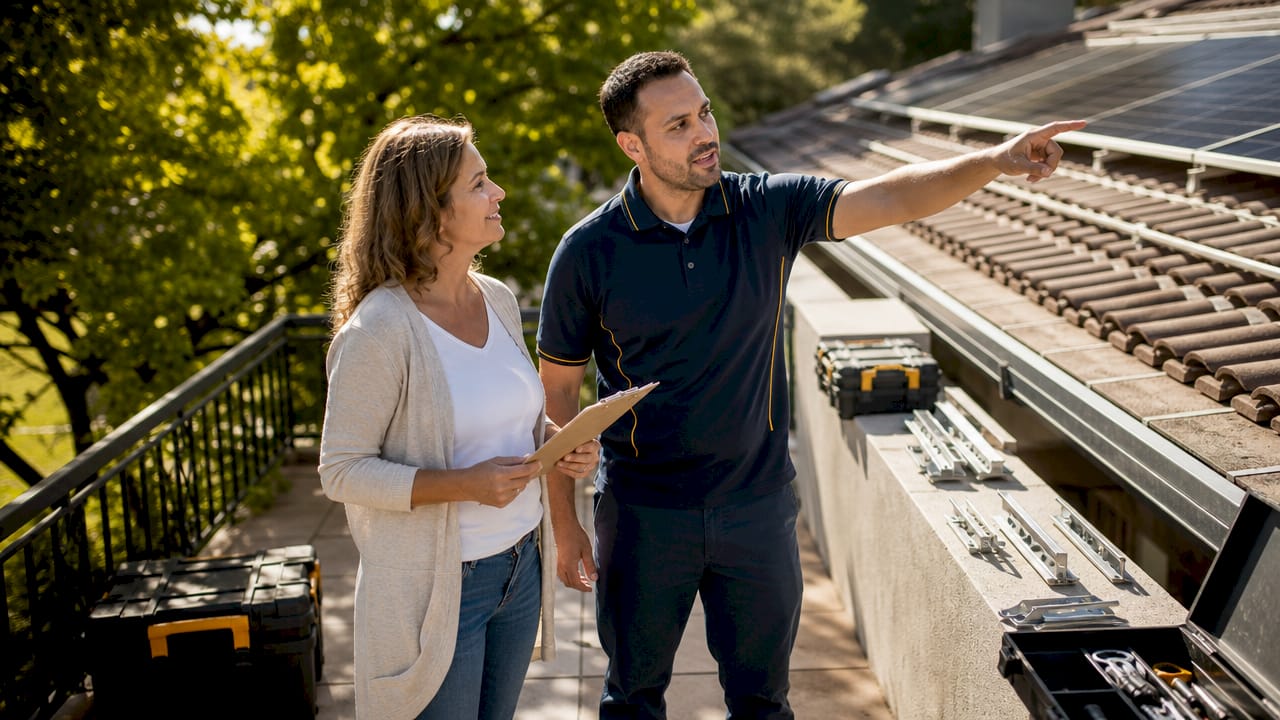
Bundling roof replacement with solar installation is defined as coordinating both projects into a single contract, and homeowners who do it save $4,000 to $15,000 compared to scheduling them separately. The cost savings bundling roof and solar delivers come from eliminating duplicate labor, shared permitting costs, and avoiding a future solar panel removal when your roof eventually needs replacing. San Diego Solar has managed this type of combined project for nearly 30 years, and the financial case is clear every time. If your roof has fewer than 10 years of life left and you are considering solar, doing both at once is the most cost-efficient path available to you.
1. What are the main financial savings when bundling roof and solar?
Shared labor is the single largest source of savings in a bundled project. Roofing crews and solar installers both need scaffolding, safety equipment, and time on your roof. When they work together under one contract, you pay for that setup once instead of twice, saving roughly $3,000 to $6,000 in combined labor and mobilization costs.
Permitting fees add up faster than most homeowners expect. Residential solar permits alone run $150 to $700 depending on your municipality, and roofing permits carry their own fees on top of that. Bundling both into a single project often means one inspection visit and one set of administrative costs rather than two separate rounds.

The biggest hidden savings come from avoiding a future remove-and-reinstall. If you install solar on an aging roof and that roof fails five years later, you will pay $4,000 to $10,000 just to remove and reinstall your panels so the roofer can work. That cost wipes out years of energy savings in a single check.
Pro Tip: Ask your contractor to provide a side-by-side cost comparison showing the bundled price versus the estimated cost of doing each project separately, including a projected remove-and-reinstall expense. That single document usually closes the debate.
Typical combined roof and solar projects cost $25,000 to $50,000 depending on roof size, materials, and system scale. That range sounds wide, but the savings from bundling represent a meaningful percentage of the total, and the avoided future costs make the math even more favorable.
2. How solar tax incentives apply when you bundle
The federal solar tax credit covers 30% of qualifying solar costs, but it does not apply to standard roofing materials. That distinction matters when you bundle. The 30% credit applies to solar panels, inverters, battery storage, and installation labor directly tied to the solar system. Your new shingles or tiles do not qualify unless they are solar-generating products.
Solar shingles and building-integrated photovoltaics (BIPV) qualify for the full 30% credit on both materials and labor through 2032. After that, the credit drops to 26% in 2033 and 22% in 2034. If you are considering solar shingles as your roofing material, the timing of your project directly affects how much you recover.
For traditional roofing paired with solar panels, the key is contract structure. Clear itemized billing separates roofing costs from solar costs so you can apply the tax credit only to the eligible solar portion. Without that separation, your accountant cannot accurately calculate your credit, and you risk leaving money on the table or triggering an audit.
Pro Tip: Request a contract that lists roofing line items and solar line items separately, even if the work happens simultaneously. Your tax preparer will need that documentation to claim the 30% credit correctly.
The 30% federal tax credit also covers battery storage systems like the Tesla Powerwall and Enphase IQ when installed alongside solar. If you are bundling a roof replacement with solar and adding a battery, all three components can be addressed in one project with one itemized contract covering all eligible costs.
3. Warranty alignment is a benefit most homeowners overlook
Roofing warranties and solar equipment warranties rarely align when installed by different contractors at different times. A roofing company that installs a 25-year shingle warranty may void or limit that coverage if a separate solar contractor later penetrates the roof deck to mount panels. That gap in coverage leaves you exposed if a leak develops near a panel mount.
Bundled projects eliminate blame-shifting between contractors. When one team handles both the roof and the solar installation, there is one point of accountability for any leak, damage, or performance issue. That simplicity protects you in ways that separate contracts cannot.
Roofing warranties may be voided or limited if solar panels are installed later by a different contractor. Bundled projects ensure warranty alignment and coverage coordination from day one, giving homeowners a single point of accountability for both systems.
San Diego Solar’s solar roofing packages cover both the roof and the solar system under coordinated warranty terms. That structure means you call one number if something goes wrong, not two contractors who each point at the other.
4. Technical integration improves system performance
Reroofing is the only time you can run wiring conduits under the roof decking without tearing anything apart. Pre-running conduits during a reroof protects wiring from UV exposure and weather, extends the life of the electrical components, and eliminates the external conduit runs that make retrofitted solar installations look industrial on a residential home.
Panel placement also improves when roof and solar are designed together. During a reroof, your contractor can reposition vents, adjust ridge lines, and select shingle colors that maximize usable roof plane for solar. A roof designed around solar production from the start generates more power than a solar system retrofitted onto a roof that was never optimized for it.
Roof plane optimization during reroof is one of the most underused advantages of bundling. Most homeowners do not realize their roof layout can be adjusted during replacement. Moving a vent two feet can open up an additional panel position, which adds kilowatts of capacity without adding roof area.
San Diego Solar’s in-house engineering team designs every system around your specific roof geometry, energy usage, and shading conditions. That custom approach is only possible when the roof and solar are treated as one integrated project from the start.
5. Lifespan matching protects your long-term investment
A standard asphalt shingle roof lasts 20 to 30 years. A quality solar system also carries a 25-year production warranty. When you install both at the same time, their lifespans run in parallel. When you install solar on a roof that is already 10 years old, you are setting yourself up for a forced remove-and-reinstall before the solar system reaches the end of its useful life.
Remove-and-reinstall costs of $4,000 to $10,000 represent the largest hidden expense homeowners face when they do not bundle. That expense does not generate any energy savings. It simply restores the status quo after an avoidable disruption.
Matching lifespans also protects your solar return on investment. San Diego homeowners typically see full payback in 5 to 7 years. A forced roof replacement and panel reinstall in year 8 or 10 resets a significant portion of those accumulated savings. Bundling eliminates that risk entirely.
6. Single-contract project management reduces scheduling conflicts
Separate roof and solar projects create scheduling gaps that cost time and money. A roofing contractor finishes, then a solar contractor schedules a site visit, then permits are pulled, then installation is scheduled. That sequence can stretch a combined project from weeks into months, leaving your home exposed to weather between phases.
Bundled projects reduce scheduling conflicts that commonly occur when roof and solar contractors operate independently. One project manager coordinates both trades, which compresses the timeline and reduces the number of days your roof is open or partially completed.
A single contract also simplifies your payment structure. Instead of managing two separate financing arrangements, two sets of change orders, and two completion timelines, you track one project with one payment schedule. That clarity reduces errors and makes it easier to apply for bundled financing.
7. Bundled financing simplifies the cost of both upgrades
Bundled financing options combine roof and solar costs into a single loan, typically with terms up to 25 years and rates around 4% to 9%. That structure is often more favorable than financing each project separately through different lenders with different terms and different monthly payments.
A single loan also makes the math easier to evaluate. You compare one monthly payment against your projected energy savings and reduced insurance exposure. That comparison is straightforward. Comparing two separate loans against a blended savings figure is not.
San Diego Solar’s prepaid lease program saves homeowners 30 to 40% on upfront costs. Combined with the 30% federal tax credit on the solar portion, the net cost of a bundled project is substantially lower than the sticker price suggests. Understanding solar costs in San Diego before you start helps you evaluate financing terms with realistic numbers in hand.
8. Roof design can be optimized for maximum solar output
Most homeowners replace a roof to match what was already there. That is a missed opportunity. During a reroof, you can choose materials, colors, and layouts that actively support solar performance. Light-colored or cool-roof materials reduce attic heat gain, which keeps your solar panels cooler and operating at higher efficiency.
A cool roof paired with solar panels produces more energy than the same panel array on a dark, heat-absorbing surface. Solar panels lose efficiency as their temperature rises, so the roof material directly affects how much electricity your system generates over its lifetime.
Vent placement, ridge orientation, and obstruction removal are all easier to address during a reroof than after the fact. San Diego Solar’s engineering team accounts for all of these factors when designing a bundled system. The result is a roof and solar installation that work together rather than simply coexisting.
9. Insurance and liability coverage is cleaner with one contractor
When a leak appears near a solar panel mount, two separate contractors will each argue the other caused it. That dispute can take months to resolve and may leave you paying out of pocket while the argument continues. A single contractor with unified liability coverage eliminates that scenario.
How solar affects your homeowners insurance is a question most homeowners do not ask until something goes wrong. Bundled projects make the insurance picture cleaner because one contractor carries liability for both the roof penetrations and the solar installation. Your insurer has one party to contact if a claim arises.
San Diego Solar handles all permitting, SDG&E interconnection, and HOA approvals as part of every installation. That full-service approach means the liability chain is clear from the permit application through the final inspection, with no gaps between trades.
Key Takeaways
Bundling roof replacement with solar installation is the most cost-efficient approach for homeowners planning both upgrades, saving $4,000 to $15,000 while improving warranty coverage, system performance, and project management.
| Point | Details |
|---|---|
| Total savings potential | Bundling saves $4,000–$15,000 by eliminating duplicate labor, permits, and future remove-and-reinstall costs. |
| Tax credit clarity | Use an itemized contract to separate roofing and solar costs so you can claim the 30% federal tax credit accurately. |
| Warranty alignment | One contractor covering both roof and solar eliminates blame-shifting and protects your coverage for up to 25 years. |
| Lifespan matching | Installing both systems simultaneously aligns their 25-year lifespans and avoids a costly mid-life panel reinstall. |
| Financing simplicity | A single bundled loan with terms up to 25 years is easier to manage and often carries better rates than two separate loans. |
Why I always recommend bundling roof and solar at the same time
After watching thousands of San Diego homeowners navigate this decision over three decades, the pattern is consistent. The homeowners who bundle save more money, have fewer problems, and feel better about the project years later. The ones who install solar on an aging roof and come back five years later for a remove-and-reinstall are never happy about it.
The part that surprises most people is how much the roof design matters to solar performance. I have seen systems produce meaningfully more power simply because the roof was laid out with solar in mind from the start. Moving a vent, choosing a lighter shingle, or clearing a partial shade obstruction during the reroof costs almost nothing at that stage. Doing it after the panels are installed costs thousands.
The other thing I have learned is that warranty disputes between separate contractors are genuinely painful for homeowners. Nobody wants to be in the middle of two companies arguing about who caused a leak. A single contract with unified accountability is not just convenient. It is protection.
If your roof has fewer than 10 years of life left, do not install solar on it first. Get a bundled quote, run the numbers with the 30% tax credit applied to the solar portion, and compare that against the cost of doing each project separately plus a future remove-and-reinstall. The bundled option wins that comparison almost every time.
— Curtis Williamson
San Diego Solar’s bundled roof and solar installations
San Diego Solar has completed bundled roof and solar projects across San Diego County for 30 years, using 100% in-house crews with no subcontractors. Every project comes with a single itemized contract covering both the roofing and solar components, coordinated warranty terms, and full permitting handled by our team.

Financing options include bundled solar loans that cover both the roof and the solar system in one payment, and our prepaid lease program reduces upfront costs by 30 to 40%. The 30% federal tax credit applies to all qualifying solar components in your project. Whether you are in Del Mar or Oceanside, our engineering team designs every system around your specific roof, usage, and goals. Request a free consultation at San Diego Solar and get a written project timeline before you commit to anything.
FAQ
How much can I save by bundling roof and solar?
Homeowners typically save $4,000 to $15,000 by bundling, primarily by avoiding duplicate labor costs and future remove-and-reinstall expenses that run $4,000 to $10,000.
Does the 30% federal tax credit apply to roofing costs in a bundled project?
The 30% federal tax credit applies only to solar-generating components, not standard roofing materials. Solar shingles and BIPV products qualify for the full credit on both materials and labor through 2032.
Will installing solar void my roof warranty?
A separate solar contractor installing panels after your roof is complete can void or limit your roofing warranty. Bundling both projects under one contractor eliminates that risk and ensures coordinated warranty coverage.
What does a typical bundled roof and solar project cost?
Combined projects typically cost $25,000 to $50,000 depending on roof size, materials, and solar system scale. Financing options with terms up to 25 years can spread that cost into a single manageable monthly payment.
When is the best time to bundle roof replacement with solar?
The best time is when your roof has fewer than 10 years of life remaining. Installing solar on a roof that will need replacement before your panels reach the end of their 25-year lifespan creates an avoidable and expensive remove-and-reinstall situation.