Beat June 30: EV Charger Tax Credit 2026 for U.S. Homeowners
Beat June 30: EV Charger Tax Credit 2026 for U.S. Homeowners
Yes, the federal EV charger tax credit still exists in 2026, but only for equipment placed in service on or before June 30, 2026. Homeowners can claim 30% of installation costs, up to $1,000 per charging port, while businesses follow a separate 6% or 30% structure. The single biggest risk right now isn’t eligibility. It’s timing.
TL;DR:
- Installation must be completed and operational before June 30, 2026, to qualify, making timing crucial even if the equipment is ordered earlier.
- The credit covers 30% of total costs, including labor and property directly related to the charger, with a $1,000 cap per port for homeowners.
- Eligibility depends on installing at your principal residence within an eligible census tract, verified via the 11-digit GEOID before signing contracts.
- Filing requires detailed documentation, including signed inspection reports, permit numbers, and separate forms for each qualified charger, with attention to timing and GEOID accuracy.
- Proper installer procedures ensure timely placement-in-service, avoiding delays that could disqualify your claim, especially given tight scheduling with permitting and inspections.
Table of Contents
- What the EV Charger Tax Credit 2026 Deadline Actually Covers
- Who Qualifies for the Home EV Charger Tax Credit
- How Much Is the EV Charger Tax Credit and What Costs Qualify
- How Do You Check If Your Address Qualifies for the Census Tract Requirement?
- How to Claim the EV Charger Tax Credit: Forms and Filing Steps
- The Mistakes That Cost People This Credit
- What Installers Get Right That Homeowners Often Miss
- Book a Consultation Before the June 30 Deadline Closes In
- Authoritative Sources to Confirm Your Eligibility
- FAQ
What the EV Charger Tax Credit 2026 Deadline Actually Covers
The credit is officially called the Section 30C Alternative Fuel Vehicle Refueling Property Credit, and the IRS administers it. It originally ran from January 1, 2023, but recent legislation moved the termination date up to June 30, 2026, which is much earlier than most homeowners expect.
The catch is the phrase “placed in service.” That doesn’t mean ordered, paid for, or even delivered. It means installed, energized, inspected, and ready to charge a vehicle right now.
- Ordering a charger in May 2026 does nothing for you if the electrician can’t finish the job until August.
- A permit application submitted in June doesn’t count. A signed inspection does.
- If your installer’s schedule is backed up, your placed-in-service date could easily land after the cutoff, even if you signed a contract months earlier.
Picture two neighbors who both order the same 48 amp charger on May 1, 2026. One’s electrician finishes the panel upgrade and gets a final inspection sign-off on June 20. The other’s job gets delayed by a permit backlog and wraps up July 8. The first neighbor gets the credit. The second does not, even though they spent the same money on the same day.
Who Qualifies for the Home EV Charger Tax Credit
Eligibility splits into three distinct paths, and the paperwork looks different depending on which one applies to you.
- Personal homeowners: The charger must be installed at your principal residence, and it has to be original use equipment, meaning nobody used it before you. You’ll also need to confirm your address sits inside an eligible census tract, which trips up more filers than any other requirement.
- Businesses: The charger counts as depreciable property. Base credit is 6% of cost, jumping to 30% if you meet prevailing wage and apprenticeship (PWA) standards. Larger commercial installs may also need Form 7220 filings alongside the main credit paperwork.
- Tax-exempt and government entities: These organizations can use elective pay, sometimes called direct pay, which converts the credit into a cash payment instead of a tax offset. That requires registering through IRS portals in advance, and that registration process alone can take weeks.
None of these paths overlap much on documentation, so figure out which bucket you’re in before you start collecting receipts.
How Much Is the EV Charger Tax Credit and What Costs Qualify
For individuals, the math is straightforward: 30% of the total cost of the charging equipment and its installation, capped at $1,000 per charging port. That 30% includes labor, wiring, conduit, and any associated property that’s directly traceable to the charger itself, not just the hardware sitting on your garage wall.
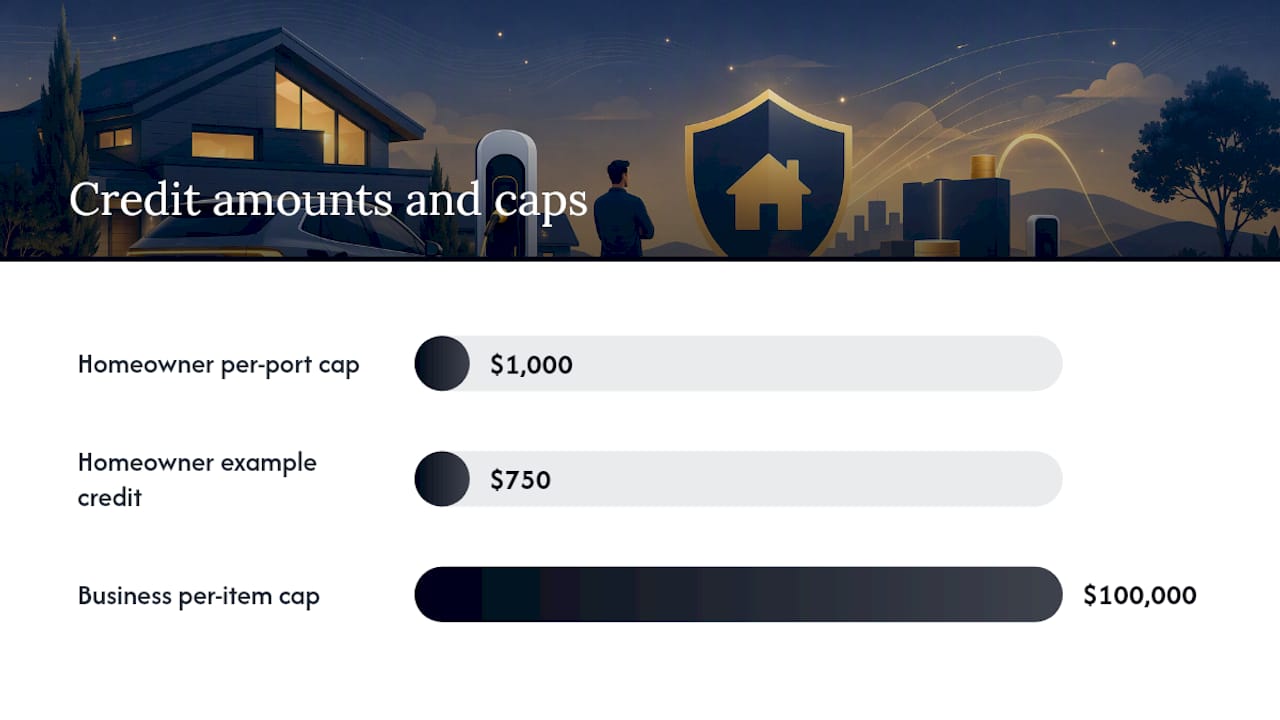
Statistic to remember: A $4,000 installation (charger plus electrical work) generates a $1,000 credit, not $1,200, because the per-port cap kicks in before the percentage math would otherwise land higher.
For businesses, the calculation runs differently:
- Base rate: 6% of cost, capped at $100,000 per item.
- Enhanced rate: 30% of cost, same $100,000 cap, if the project meets prevailing wage and apprenticeship requirements.
- Basis reduction: whatever credit you claim reduces the depreciable basis of the property, which affects bonus depreciation and Section 179 calculations down the line.
A homeowner spending $2,500 on a Level 2 charger and installation gets a $750 credit (30% of $2,500). A business spending a certain amount on commercial chargers without meeting PWA gets 6% of the cost as credit. If PWA requirements are met, the rate increases to 30% of the cost, subject to the applicable maximum limits.
How Do You Check If Your Address Qualifies for the Census Tract Requirement?
This is where a lot of otherwise well-prepared taxpayers get blindsided. The credit only applies if your installation site sits inside an eligible census tract, and Schedule A specifically enforces this by requiring the 11-digit GEOID before it lets the claim proceed.
Here’s how to check it:
- Open the Census 2020 Tract Identifier mapping tool and enter your installation address.
- Copy the 11-digit GEOID it returns exactly as shown.
- Cross-check that tract number against Appendix B on the IRS site to confirm it’s listed as eligible.
- Save a screenshot or PDF of both results with your project file.
Pro Tip: Do this before you sign a contract or order equipment, not after. San Diego Solar has seen homeowners spend money on hardware only to discover their address falls outside an eligible tract, which means no credit regardless of how well the installation goes.
How to Claim the EV Charger Tax Credit: Forms and Filing Steps
Claiming the credit means filing two documents together, and missing either one stalls your return or invites a follow-up notice.
- Complete Form 8911, the main credit form where you calculate your total benefit and carry it to your tax return.
- File a separate Schedule A (Form 8911) for every qualified item, not one combined schedule for multiple chargers. Each schedule needs the placed-in-service date, the GEOID, cost allocation between hardware and labor, and any permit or certification numbers.
- Attach PWA certification if you’re a business claiming the 30% enhanced rate. This isn’t optional documentation; the IRS treats it as a prerequisite for the higher rate.
- Keep supporting records: itemized invoices that separate labor from hardware, the inspection or commissioning sign-off from your local building department, and (for business filers) certified payroll records tied to the PWA claim.
- File on the return for the year the charger was placed in service, not the year you paid for it if those years differ. Tax-exempt entities using elective pay need to complete IRS portal registration well ahead of filing season, since that process runs on its own timeline separate from the return itself.
The Mistakes That Cost People This Credit
Most denied or reduced claims trace back to a handful of avoidable errors, and almost all of them are timing or paperwork failures rather than eligibility problems.
- Missing the June 30, 2026 placed-in-service deadline because installation ran late.
- Entering the wrong GEOID or skipping the Appendix B cross-check entirely.
- No commissioning report or inspection sign-off to prove the charger was actually operational, not just installed.
- Business filers claiming the 30% PWA rate without payroll documentation to back it up.
Recapture is the other risk nobody talks about enough. If a business disposes of the property or it stops being used for its original purpose within three years, the IRS can claw back part of the credit. Basis reduction compounds this. Since claiming the credit lowers your depreciable basis, an examiner who catches a basis calculation error can adjust both the credit and years of depreciation deductions at once.
If your project is running behind schedule, work through this in order: confirm your GEOID first, lock in inspection and electrician slots second, capture commissioning documentation third, and gather receipts and permits fourth. Business filers add certified PWA payroll records as a fifth step. If you’re going to miss the deadline outright, document every attempt you made to finish on time. In some contract structures, a seller or installer may be able to claim the credit instead. That’s a conversation worth having with a tax advisor before you assume the opportunity is gone.
Pro Tip: Don’t wait until tax season to organize this paperwork. Build a single folder the day your project starts and drop every receipt, permit, and inspection document into it as it arrives.
— Curtis Williamson
What Installers Get Right That Homeowners Often Miss
One thing has stayed consistent across three decades of permit offices and inspection schedules: deadlines like June 30, 2026 punish anyone who treats permitting as an afterthought. In-house crews matter here because there’s no handoff delay between the electrician, the permit runner, and the inspector.
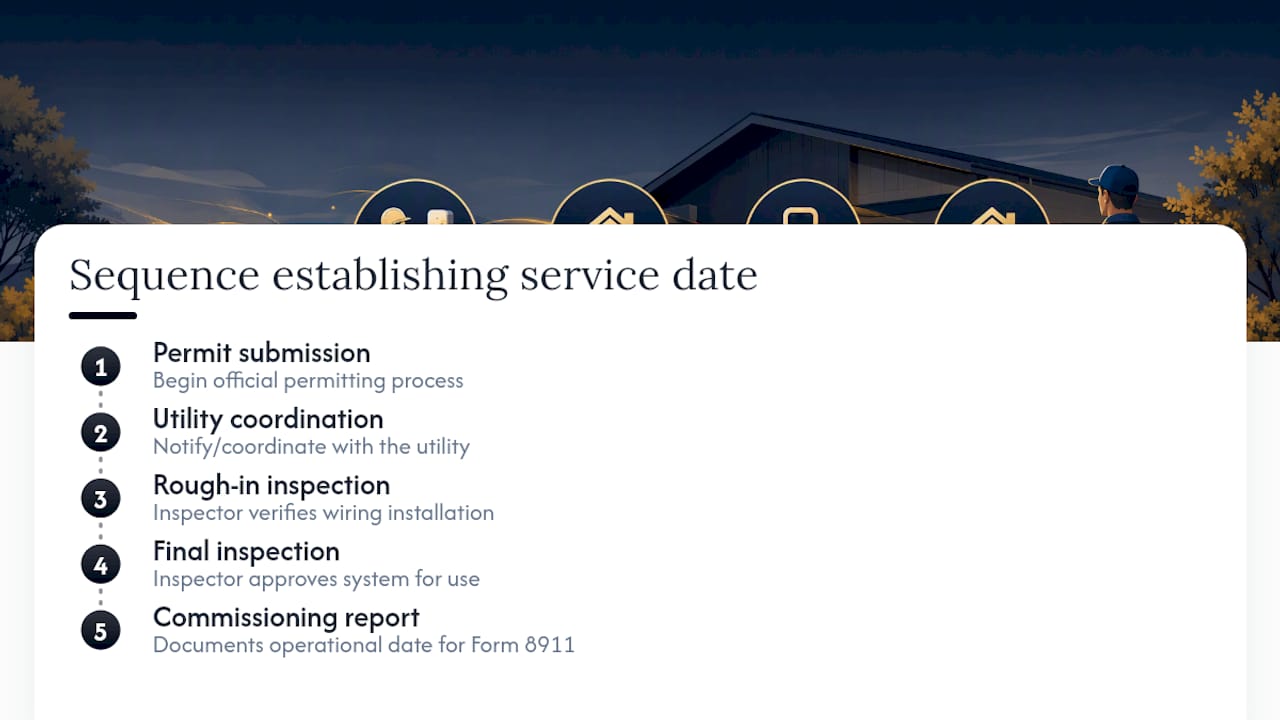
A turnkey installer handles the sequence that actually determines your placed-in-service date: permit submission, utility coordination, rough-in inspection, final inspection, and a commissioning report that documents the exact date the charger became operational. That paperwork is precisely what a Form 8911 filing needs, and precisely what an IRS examiner would ask to see if your claim ever gets a closer look.
DIY installation can work for confident electricians, but the paper trail is thinner. A licensed installer’s documentation gives you a defensible claim, not just a working charger.
Book a Consultation Before the June 30 Deadline Closes In
Every EV charger installation comes with permitting, electrical crews, and a commissioning report that documents your exact placed-in-service date, the paperwork you’ll need on hand when you file Form 8911. There is no subcontractor layer slowing down the permit-to-inspection timeline, which matters enormously when you’re racing a federal cutoff.

If you’re also weighing whether solar makes sense alongside a new charger, San Diego Solar’s engineering team can size a system to power your EV charging setup without leaning on peak utility rates. And if you’re comparing installers before committing, it’s worth knowing what separates a qualified solar and EV installer from one that will leave you scrambling for documentation come filing season.
Get a free consultation and a written project timeline through San Diego Solar’s San Diego installation page, and find out how soon your charger can be commissioned before the June 30, 2026 window closes.
Authoritative Sources to Confirm Your Eligibility
Verify every claim in this article directly against the primary sources before you file.
- Instructions for Form 8911, the IRS’s line-by-line guidance and deadline confirmation.
- Form 8911 PDF, the main credit calculation form.
- Schedule A (Form 8911) PDF, required per qualified item, including the GEOID field.
This article is general information, not a substitute for advice from a qualified financial advisor. Consult a qualified financial professional about your own circumstances before acting on anything here.
FAQ
Are EV chargers eligible for the federal tax credit?
Yes, home EV chargers qualify for the Section 30C credit as long as the property is placed in service by June 30, 2026, and sits in an eligible census tract.
Will the EV charger tax credit still be available in 2026?
It’s available only through June 30, 2026. Any charger placed in service after that date does not qualify under current law.
Will there be premium tax credits in 2026?
This article covers the EV charger credit specifically. Other 2026 tax credits, including changes to broader solar incentives, follow separate rules and deadlines worth researching independently.
How do I check if my address qualifies for the census tract requirement?
Use the Census 2020 Tract Identifier to pull your 11-digit GEOID, then cross-check it against Appendix B on the IRS site before ordering equipment.