Solar Decisions Homeowners Regret Most (and How to Avoid Them)
Solar Decisions Homeowners Regret Most (and How to Avoid Them)
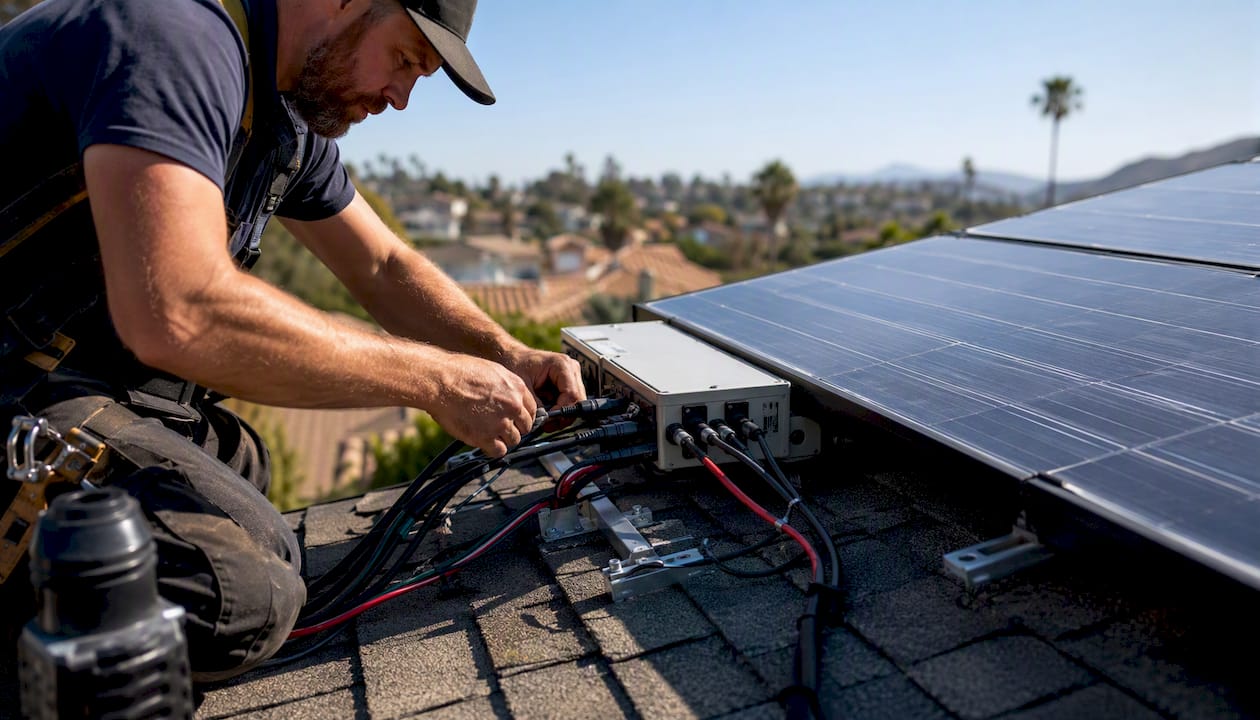
The most common examples of solar decisions homeowners regret fall into a predictable pattern: skipping battery backup, undersizing the array, signing a lease without reading it, and choosing an installer based on price alone. Here is the short list, each with a one-line fix.
- No battery backup — Add battery-ready wiring and a transfer switch stub at install, even if you skip the battery for now.
- Undersized array — Size for your five-year energy picture, not just today’s bill.
- Leased panels — Own the system outright or understand every buyout and transfer clause before signing.
- No monitoring — Set up production alerts from day one and check weekly for the first three months.
- Wrong installer — Verify in-house crews, a physical office, and a verifiable local track record before you commit.
- Skipped roof prep — Inspect roof age before install; bundle roof and solar if the roof has fewer than five years left.
- Shading and placement mistakes — Commission a 12-month shade study before finalizing panel layout.
- Inverter/cloud trade-offs — Ask specifically about offline monitoring and what happens if the cloud service changes pricing.
- Missed incentives — File IRS Form 5695 the same tax year as installation and keep every invoice.
- Timeline and cost surprises — Get a written project timeline and a line-item bid before signing anything.
Key Takeaways
The single most preventable solar regret is skipping battery-ready electrical prep at install, because retrofitting it later costs significantly more and requires duplicate permit and labor work.
| Point | Details |
|---|---|
| Battery-ready prep at install | Wire for battery backup from day one; retrofitting later duplicates electrical work and permit costs. |
| Size for future loads | Include projected EV and appliance growth in your array size; adding panels later means paying soft costs twice. |
| Own the system | Leased panels can stall a home sale and force costly buyouts; ownership avoids transfer and lender complications. |
| Monitor from day one | Set production threshold alerts and check weekly for the first three months to catch faults before they cost you months of output. |
| San Diego Solar’s approach | In-house crews, battery-ready installs, and roof-plus-solar bundles across San Diego County address the top regrets before they happen. |
Table of Contents
- 1. Skipping battery backup and regretting it during the first outage
- 2. Undersizing the array and wishing you had added more panels
- 3. Leasing panels and watching a home sale fall apart
- 4. Skipping monitoring and missing a fault for months
- 5. Choosing the wrong installer or accepting subcontractor-heavy work
- 6. Installing solar on a roof that needed replacement first
- 7. Shading and poor panel placement reducing production and ROI
- 8. Inverter choice and cloud dependence creating unexpected headaches
- 9. Missing incentives, tax credits, or misunderstanding NEM rules
- 10. What survey data and 30 years of installs reveal about common regrets
- 11. Underestimating how solar looks on your roof and what your HOA requires
- 12. Not accounting for future renovations that affect your solar system
- The real cost vs. resilience trade-off most homeowners get wrong
- San Diego Solar helps you avoid these regrets before they happen
- Sources
1. Skipping battery backup and regretting it during the first outage
A homeowner in Chula Vista installed a solid 10-panel system in 2021, watched her electric bill drop by nearly 80%, and felt great about the decision. Then a grid outage hit during a summer heat event. Her panels kept generating power, but without a battery and transfer switch, every circuit in the house went dark anyway. Solar panels alone cannot power your home during a grid outage unless the system is specifically designed with battery backup and an automatic transfer switch.
Why this happens: Most homeowners focus on the payback period and monthly savings at the point of sale. Battery storage adds upfront cost, so installers who compete on price often leave it out of the initial proposal. The homeowner assumes the panels will “keep the lights on” and nobody corrects that assumption until the first outage.
Avoidance checklist:
- Ask your installer to wire the electrical panel as “battery-ready” during the initial install, even if you defer the battery purchase. This means reserving breaker space and installing a transfer switch stub.
- Estimate your critical load: refrigerator, medical equipment, a few lights, and phone charging typically require 5–10 kWh per day.
- Get a written quote for adding a battery later and ask what the duplicate electrical work would cost if the panel is not pre-wired.
- Review battery options such as the Tesla Powerwall and Enphase IQ battery systems for capacity, warranty length, and compatibility with your inverter before install day.
Installer guidance confirms that skipping battery-ready electrical prep during the initial install is one of the most expensive mistakes to fix later. Duplicate electrical work, a second permit pull, and additional labor can add thousands to the retrofit cost.
2. Undersizing the array and wishing you had added more panels
Homeowner accounts consistently flag the same regret: not installing an extra two or three panels at the time of the original job. The reason surfaces a year or two later when a new EV arrives in the driveway, a heat pump replaces the gas furnace, or a teenager starts working from home and the electric bill climbs back up.
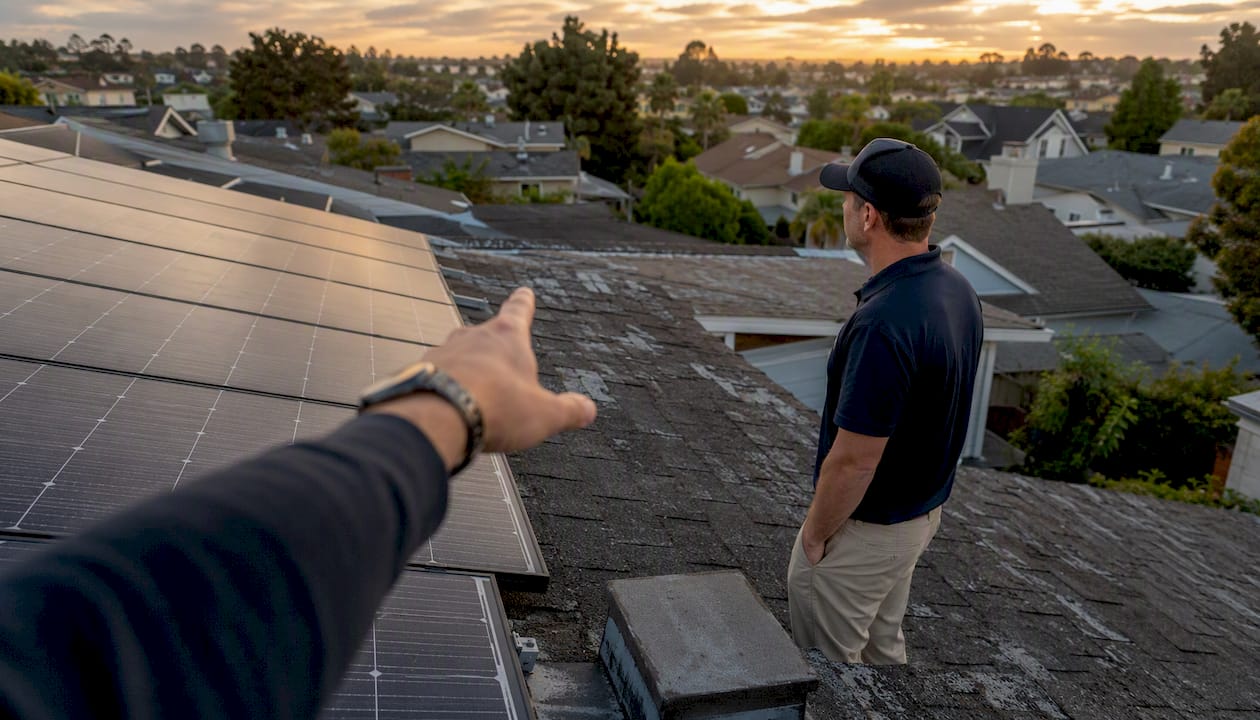
The math is straightforward. If your household currently uses 10,000 kWh per year and you plan to add an EV that averages 4,000 kWh annually, your real target is 14,000 kWh. A 7 kW system in San Diego produces roughly 10,500–11,000 kWh per year. You would need closer to 9–10 kW to cover both loads. Adding panels later costs more per watt than getting them at the original install because soft costs (permitting, engineering, interconnection fees) are paid twice.
Questions to ask your installer before signing:
- What is my projected energy use if I add an EV or heat pump in the next five years?
- How many additional panels can my roof physically accommodate?
- What is the cost difference between installing those panels now versus in three years?
- Is my inverter sized to handle additional capacity, or would I need a new one?
A decade-long homeowner account recommends installing the full intended array up front and choosing higher-watt panels to leave room for future expansion. The advice is consistent across nearly every long-term solar owner who has written about the experience.
3. Leasing panels and watching a home sale fall apart
Leased solar panels have complicated more home sales than most real estate agents want to admit. A seller in San Diego County listed their home in 2023, accepted an offer, and then watched the deal collapse when the buyer’s lender flagged the solar lease. The lease had 14 years remaining, an annual payment escalator, and a buyout price that had grown to nearly $30,000. The buyer did not want to assume the obligation. The seller had to either buy out the lease or find a new buyer willing to take it on.
Realtor.com explains that buyers may need to assume a long-term payment obligation or require the seller to buy out the lease, and some lenders will not approve a mortgage if a long-term lease remains on the property. Reporting from Yahoo Finance documents cases where sellers paid tens of thousands of dollars to clear lease contracts in order to close a sale.
Before you sign a lease, get clear answers on:
- The total remaining payment obligation over the full lease term.
- Whether the lease is transferable and what the buyer qualification requirements are.
- The buyout price today and how it escalates over time.
- Whether your lender and any future lender will treat the lease as a lien or debt obligation.
- Whether the installer will remove the panels at no cost if the lease cannot transfer.
Ownership avoids all of this. If a lease is the only financially viable path, read the full contract, not the summary sheet, and ask a real estate attorney to review the transfer and buyout clauses before you sign.
4. Skipping monitoring and missing a fault for months
One homeowner in Scripps Ranch noticed his electric bill had crept back up over several months. He assumed SDG&E had raised rates. It had not. A string inverter had failed silently, and without any monitoring system in place, he had no way to know. By the time a neighbor mentioned checking production data, he had lost roughly four months of generation.
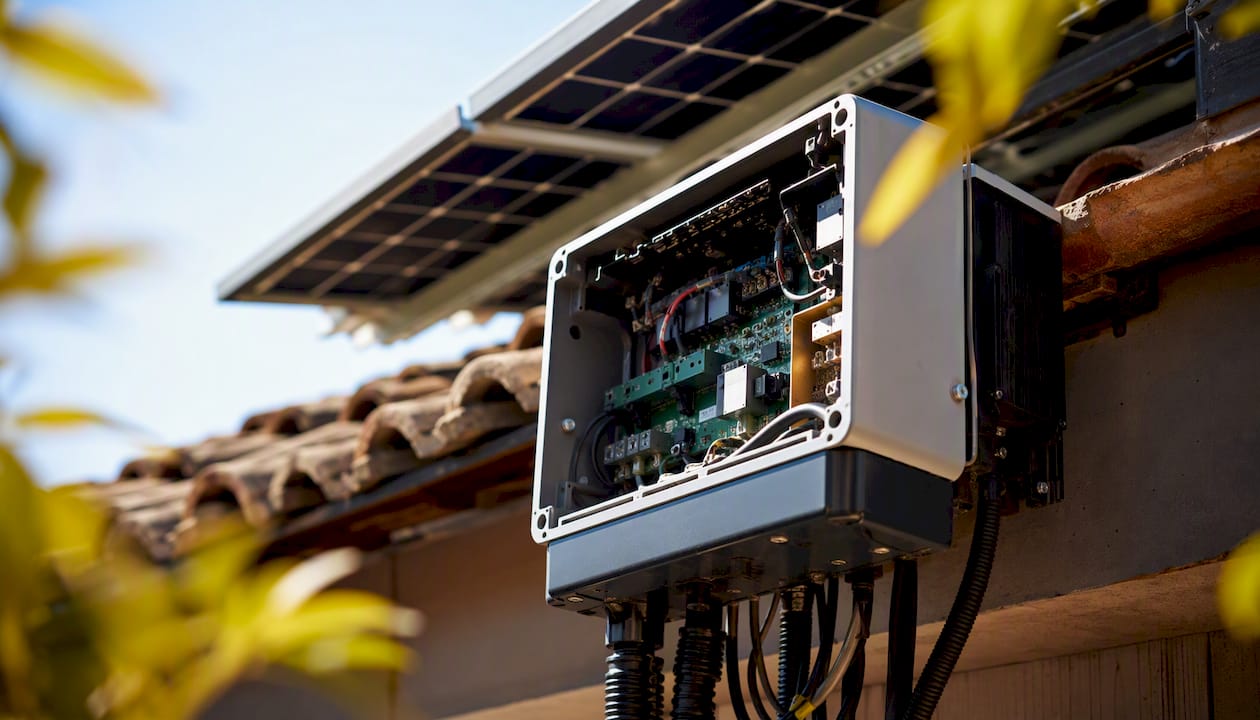
Homeowner accounts repeatedly flag lacking monitoring as a top regret, noting that failures and underperformance can go undetected for months without it. The fix is not expensive. Most inverter manufacturers provide a free monitoring portal. Third-party options like Sense or a revenue-grade production meter give you an independent read that does not depend on the inverter’s own reporting.
Monitoring options worth setting up:
- Your inverter’s native app or web portal (free with most systems).
- A third-party production meter wired at the point of interconnection for an independent baseline.
- Utility account alerts that flag unusual consumption increases.
Pro Tip: Set a production threshold alert so you get a text or email if daily output drops more than 15% below your seasonal average. Check production weekly for the first three months after install, and save at least 12 months of production logs. That data is your first line of evidence if you ever need to make a warranty claim.
5. Choosing the wrong installer or accepting subcontractor-heavy work
A homeowner in Poway signed with a solar company that offered the lowest bid in 2019. The company used a subcontractor crew for the install and a different subcontractor for electrical. Eighteen months later, the original company had closed. When a panel developed a mounting issue, there was no one to call. The manufacturer warranty covered the panel itself, but the workmanship warranty was worthless because the company no longer existed.
This is not rare. Homeowner stories document installers who disappeared after the job, leaving warranty and repair questions unresolved. The solar industry has seen multiple boom-and-bust cycles, and companies that grew fast on subcontracted labor often do not survive the downturns.
Vetting checklist before you hire:
- Verify the contractor’s California CSLB license number and check its status online.
- Ask specifically: “Do your own employees do the installation, or do you subcontract?” Get the answer in writing.
- Request three local references from jobs completed in the past two years and call them.
- Ask who performs warranty service calls and what the response time commitment is.
- Confirm the company has a physical office you can visit.
Red flags that should stop the conversation:
- A bid that is 20–30% below every other quote with no clear explanation.
- Pressure to sign before the end of a promotion period.
- Vague warranty language that says “manufacturer warranty applies” without specifying workmanship coverage.
- No verifiable local history or reviews older than two or three years.
For a deeper vetting framework, the questions to ask a solar installer guide covers the specific questions that separate accountable companies from ones that disappear after the permit closes.
6. Installing solar on a roof that needed replacement first
A homeowner in Encinitas installed a 9-panel system on a roof that was 18 years old. Two years later, the roof started leaking. The roofing contractor quoted the repair but noted the panels would need to come off first. Panel removal, temporary storage, reinstallation, and re-inspection added roughly $2,500–$4,500 to a job that would have cost far less if the roof had been replaced before or alongside the solar install.
The logic is simple: solar panels are designed to last 25–30 years. A roof with fewer than 10 years of life left will almost certainly need replacement before the panels do. Doing both jobs separately means paying for removal and reinstallation, a second permit pull, and the scheduling disruption of two separate crews.
Coordination checklist:
- Have a licensed roofer inspect the roof before you finalize any solar proposal. Ask for a written estimate of remaining useful life.
- If the roof has fewer than 10 years left, get a combined roof-and-solar quote. Bundling roof replacement with solar reduces total cost and eliminates the remove-and-reinstall risk entirely.
- Ask your solar installer for their panel removal and reinstall rate in writing, so you know the exposure if a future roof repair requires it.
- Confirm that your homeowners insurance covers panel removal during a roof claim. The insurance implications of solar on your roof are worth reviewing before you commit.
- Check permit timing: some jurisdictions require a roofing permit and a solar permit to be pulled together when work happens simultaneously.
7. Shading and poor panel placement reducing production and ROI
A homeowner in La Jolla installed 12 panels on a south-facing roof. What the installer did not flag was a large pine tree on the western property line that cast a shadow across four panels every afternoon from October through March. With a string inverter, those shaded panels dragged down the output of the entire string. Annual production came in roughly 20–25% below the estimate the installer had provided.
Why this happens: A quick site visit in July does not capture winter sun angles. Trees grow. Seasonal shading from a neighbor’s addition or a new structure can appear years after install. Some installers skip a full 12-month shade analysis because it takes more time and requires specialized software.
Technical options when shading is unavoidable:
- Microinverters (one per panel) isolate each panel’s output so a shaded panel does not pull down the rest.
- DC power optimizers work similarly, allowing each panel to operate at its maximum regardless of what adjacent panels are doing.
- A revised panel layout that avoids the shaded roof sections, even if it means fewer panels.
- A ground-mount system if the roof geometry is genuinely problematic.
Pro Tip: Before finalizing your panel layout, ask your installer to run a 12-month shading analysis using software like Aurora Solar or Solargraf. If trees are the issue, get an arborist’s opinion on pruning before install day. Repositioning panels on paper costs nothing; repositioning them after installation costs real money.
8. Inverter choice and cloud dependence creating unexpected headaches
One homeowner in Del Mar chose a string inverter system because it was $1,500 cheaper than a microinverter option. The monitoring worked through the manufacturer’s cloud portal. Two years in, the manufacturer changed its monitoring subscription terms. Accessing detailed production data now required a paid plan. The homeowner had no offline fallback and no independent production meter.
Trade-offs worth understanding before you choose:
- String inverters cost less upfront and are simpler to replace, but one inverter failure affects the entire array, and shading on any panel reduces total output.
- Microinverters (such as Enphase IQ) give you panel-level data and isolate faults, but each unit is a separate piece of hardware that could eventually need replacement.
- Cloud dependence is a real risk with any system that requires an active internet connection and a manufacturer’s server to display production data. Ask what happens to your monitoring if the cloud service is discontinued or changes pricing.
Questions to ask your installer about inverter and monitoring:
- Does the monitoring system work offline or only through a cloud portal?
- What is the inverter warranty, and who performs the replacement if it fails?
- If I choose microinverters, what is the per-unit replacement cost after the warranty period?
- Can I add a third-party production meter as an independent backup?
Installation quality and inverter choice directly affect real-world production numbers, not just the spec sheet estimate.
9. Missing incentives, tax credits, or misunderstanding NEM rules
A homeowner in Oceanside installed panels in late November and assumed the tax credit would apply to that year’s return. It did. But he had not kept the contractor’s W-9, the itemized invoice, or the permit completion certificate. When his accountant asked for documentation to file IRS Form 5695, he spent three weeks tracking down paperwork. A neighbor in the same situation missed the filing window entirely and lost the credit for that tax year.
The federal Residential Clean Energy Credit covers 30% of the cost of solar panels, battery storage, and installation. The credit applies in the tax year the system is placed in service, not when you sign the contract. A This Old House survey found that roughly 11% of homeowners did not apply for or qualify for federal or state incentives, a gap that often comes down to paperwork timing and eligibility confusion.
Incentive checklist:
- Collect every invoice from your installer, including labor, equipment, and permitting fees.
- Confirm your installer provides a W-9 and a signed completion certificate.
- File IRS Form 5695 in the same tax year the system passes final inspection and is interconnected.
- Check your state’s net energy metering rules. California’s NEM 3.0 program changed the export credit structure significantly; a battery paired with solar now produces better financial outcomes than solar alone under the current rate design.
- Ask your utility about interconnection timelines. SDG&E interconnection approval can take several weeks, and the system cannot legally export power until approval is granted.
10. What survey data and 30 years of installs reveal about common regrets
The This Old House solar survey captures the satisfaction picture clearly: most homeowners are positive about their decision, but a meaningful minority report gaps that were entirely preventable.
| Metric | Survey finding |
|---|---|
| Homeowners who did not apply for or qualify for incentives | ~11% |
| Homeowners who were neutral or somewhat dissatisfied | ~5% |
| Homeowners unlikely to recommend solar | ~4% |
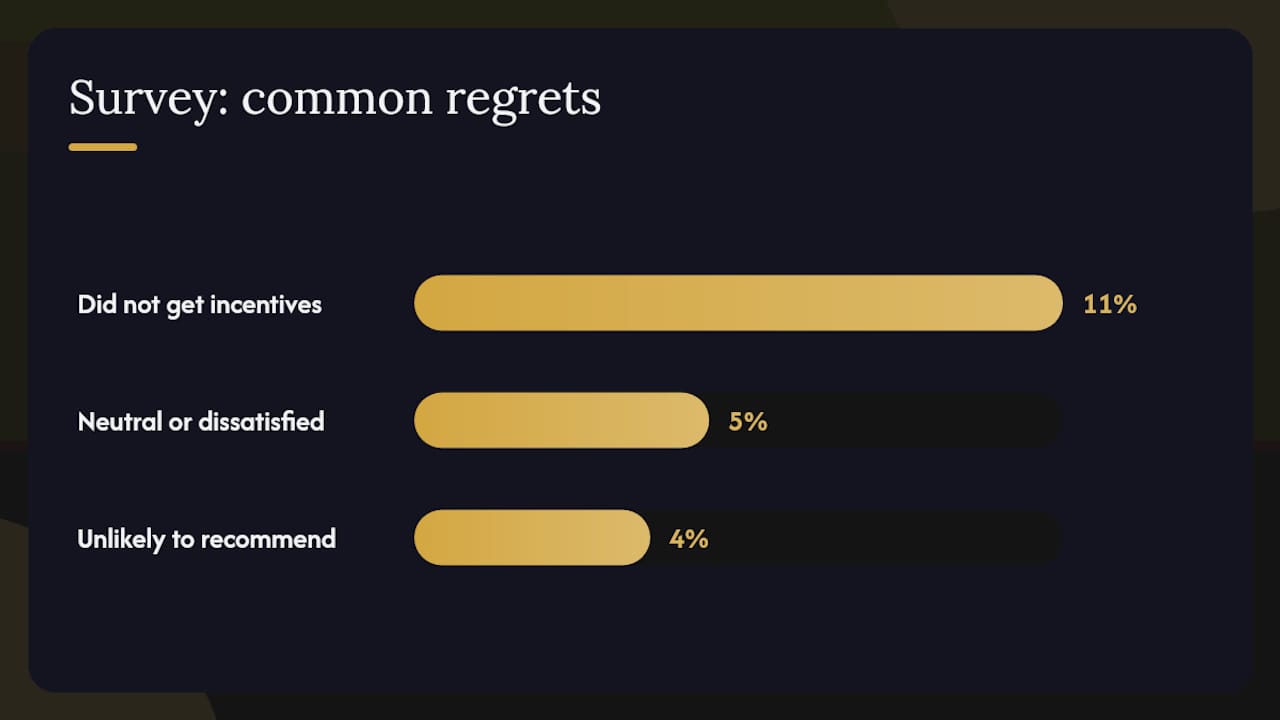
The three regrets that show up most consistently across survey data and homeowner accounts are: no battery backup, undersized arrays, and installer problems. All three are preventable with the right pre-install process.
Installer checklist: what a thorough pre-install process covers
- Roof age and structural assessment before panel layout is finalized.
- A 12-month shade study, not a single-day site visit.
- Battery-ready electrical prep included in the base scope or quoted as a line item.
- A written permit strategy and interconnection timeline from the installer before you sign.
- Documentation of all incentive paperwork the installer will provide at project close.
San Diego Solar has completed thousands of residential installations across San Diego County since 1996 using 100% in-house crews. That continuity matters when a warranty issue surfaces five years after install: the same company, the same crew model, and the same local permitting relationships are still in place.
11. Underestimating how solar looks on your roof and what your HOA requires
Aesthetics and neighborhood approval are among the home solar regrets that homeowners rarely anticipate but frequently mention after the fact. A homeowner in Rancho Santa Fe installed panels on the most productive roof plane, which happened to face the street. The HOA had no formal solar restriction (California law limits HOA authority to block solar outright), but the board sent a letter requesting a different placement. Relocating panels to a less visible plane reduced production by roughly 15%.
The practical lesson: production and aesthetics sometimes pull in opposite directions, and the best layout on paper may not be the one your neighborhood association or your own eye accepts. California’s Solar Rights Act limits what an HOA can require, but it does not eliminate the friction entirely. Getting HOA approval in writing before install day prevents disputes after the crew has left.
A few steps that prevent this regret: ask your installer to model two or three layout options with production estimates for each, so you can make an informed trade-off between output and visibility. If your HOA has a solar application process, submit it before you finalize the permit drawings. And if the aesthetics of standard blue panels are a concern, ask about all-black panels or lower-profile mounting hardware. The production difference is negligible; the visual difference can be significant.
12. Not accounting for future renovations that affect your solar system
A homeowner in Carlsbad added a second-story addition three years after installing solar. The addition shaded the existing panels for most of the afternoon. The system that had been producing well suddenly underperformed by a wide margin, and the roof geometry of the addition offered no good location for additional panels.
Future renovations are one of the most overlooked factors in solar planning. An addition, a new garage, a pergola, or even a mature tree planted near the house can change the shading profile of a roof dramatically. The same applies to capacity: a renovation that adds square footage often adds electrical load, and a system sized for the original home may fall short of the expanded one.
Before you finalize a solar proposal, tell your installer about any renovation you are considering in the next five to ten years. A good engineering team will factor that into the layout and sizing recommendation. If an addition is already planned, it may make sense to delay solar until the construction is complete, or to design the system around the post-renovation roof geometry from the start.
The real cost vs. resilience trade-off most homeowners get wrong
The conventional wisdom on solar economics goes like this: minimize upfront cost, maximize payback speed, and add batteries later if you want them. That framing is not wrong, but it is incomplete. What it misses is that “adding batteries later” almost always costs more than building for resilience from the start, because battery-ready electrical prep is cheap when the walls are open and expensive when they are not.
The practical rule: if you live in an area with frequent outages, have medical equipment that requires power, or simply cannot afford to be without electricity for 12–24 hours, treat battery backup as part of the core system, not an optional upgrade. The upfront cost difference between a battery-ready install and a standard install is modest. The cost of retrofitting a system that was not designed for batteries is not.
For homeowners who genuinely cannot afford batteries at install, the right move is still to wire for them. Reserve the breaker space, install the transfer switch stub, and document the panel capacity. That preparation costs a fraction of what a full retrofit does, and it keeps the option open without forcing the decision today.
San Diego Solar helps you avoid these regrets before they happen
Thirty years of residential solar in San Diego County teaches you which regrets show up most often and exactly when in the process they become preventable. The most common ones, skipped battery prep, undersized arrays, roof timing mistakes, and installer accountability gaps, all have the same root cause: a proposal process that prioritizes closing the sale over engineering the right system.

San Diego Solar designs every system with a 30-year horizon in mind. That means battery-ready wiring is standard, roof age is assessed before panel layout is finalized, and every system is sized for your five-year energy picture, not just today’s bill. For homeowners who want to combine a new roof with solar, the solar roofing package eliminates the remove-and-reinstall risk entirely. For homeowners focused on outage protection, the battery storage options include Tesla Powerwall, Enphase IQ, and Franklin WH, all installed by the same in-house crew that handles the panels. San Diego Solar serves every neighborhood across San Diego County, from Oceanside to Chula Vista. Schedule a no-obligation site assessment at Sandiegosolar and get a written project timeline before you commit to anything.
Sources
- Residential Clean Energy Credit (IRS)
- Solar survey: homeowner experiences and satisfaction (This Old House)
- The solar panel contracts that can kill home sales (Yahoo Finance)
- Personal solar regrets and lessons learned after a decade (How-To Geek)
- Home energy upgrades you’ll regret not doing while installing rooftop solar (Electrek)
Save every document your installer provides at project close: the itemized invoice, permit completion certificate, contractor W-9, and interconnection approval letter. You will need them for the federal tax credit, any future warranty claim, and when you eventually sell the home.
This article is general information, not a substitute for advice from a qualified financial advisor. Consult a qualified financial professional about your own circumstances before acting on anything here.