Outage Preparation in San Diego: A Homeowner's Plan
Outage Preparation in San Diego: A Homeowner’s Plan
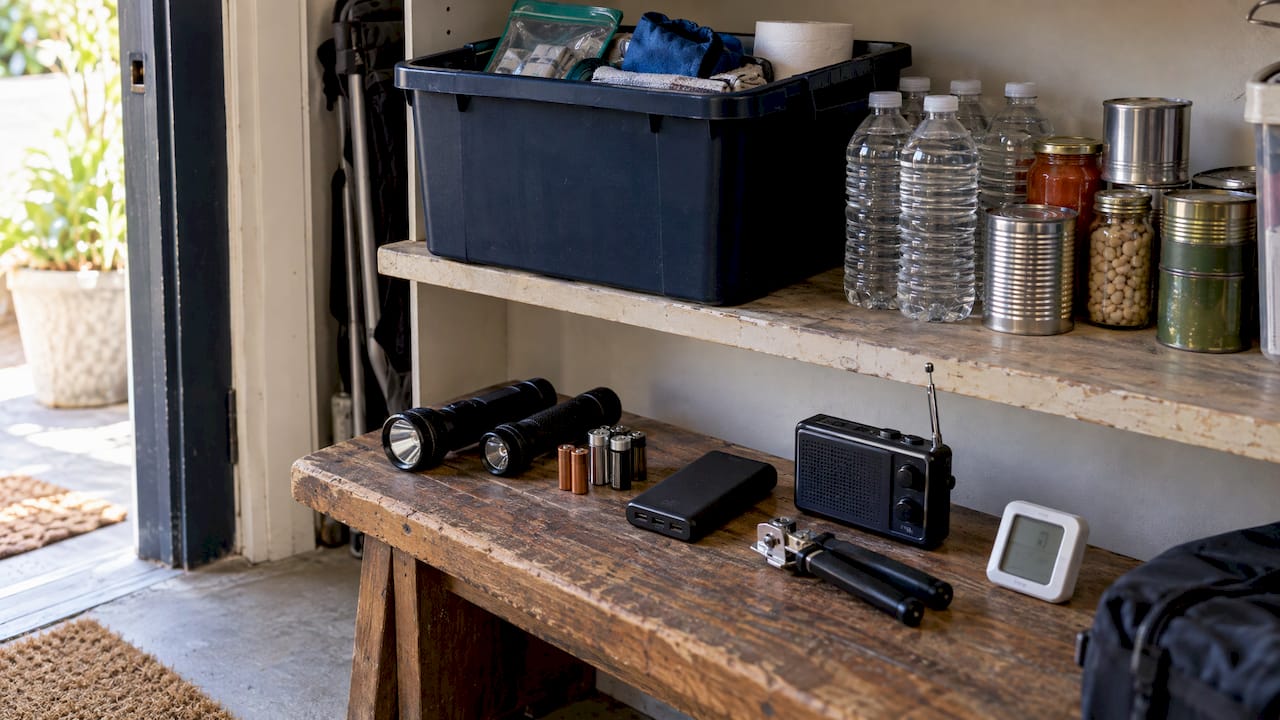
The best outage preparation in San Diego County has two layers: a household plan that covers alerts, water, food, medicine and communication, and a source of backup power at home so that the plan does not depend on a drained phone or a borrowed cooler. The first layer costs very little and you can finish it this weekend. The second is where a solar-plus-battery system from San Diego Solar comes in: a battery system is priced at $12,000 to $16,000, and it is designed to keep your essential loads running when SDG&E’s grid goes dark.
This guide walks through both layers in the order you would actually do them, with the specifics from SDG&E, the City and County of San Diego, and the American Red Cross.
TL;DR
- Sign up for SDG&E and AlertSanDiego notifications and keep your contact details current. Public safety power shutoffs (PSPS) can begin with alerts about 48 hours ahead, and they can last from several hours to multiple days.
- Stock at least three days of water (one gallon per person per day) and food, plus medicines, chargers, cash, a radio and a flashlight. The Red Cross suggests up to two weeks of nonperishables.
- A closed refrigerator keeps food cold for roughly 4 to 24 hours depending on the source, a full freezer about 48. Anything above 40°F for more than two hours is a risk.
- Never run a generator indoors or plug it into a wall outlet. Keep it outdoors and at least 20 feet from the home.
- For a hands-off answer to long outages, a home battery paired with solar keeps essential circuits running. Our battery storage service is built for exactly that.
Table of Contents
- Why outages in San Diego County are worth planning for
- Step 1: Get the alerts before you need them
- Step 2: Build the household kit
- Step 3: Protect food and medicine
- Step 4: Decide how you will power the essentials
- What is changing with SDG&E backup-power programs
- A weekend plan you can finish
- Roof, battery and panel upgrades: a note on timing
- Backup power from San Diego Solar
- Our perspective
- FAQ
- Sources
Why outages in San Diego County are worth planning for
Two kinds of outages matter here. The first is the unplanned kind: a storm, a heat wave, a failed transformer, a car into a pole. The second is deliberate. SDG&E says it may shut off power as a last resort when strong winds, low humidity, dry vegetation and other conditions create significant wildfire risk, and that a PSPS can last from several hours to multiple days.
The multi-day part is what changes the math. A two-hour outage is an inconvenience. A shutoff that stretches across a weekend means spoiled food, no well pump or garage door opener, dead phones and, for some households, medical equipment that has to keep running. Homes in inland and backcountry communities, where fire weather is most intense, are the likeliest to face this, but any home can lose power for other reasons.
Step 1: Get the alerts before you need them
The cheapest preparation is making sure the warning actually reaches you.
- Update your contact information with SDG&E. SDG&E’s safety guidance tells customers to keep their My Energy Center contact details current and sign up for outage notifications. For planned outages, SDG&E may send an email, text or mailed notice, an automated call, and a day-before reminder.
- Know the PSPS timeline. SDG&E says customer alerts may begin about 48 hours in advance, with a follow-up around 24 hours ahead, a confirmation a few hours before shutoff, updates during the event and a final restoration notice. Timing depends on conditions, so treat 48 hours as a best case rather than a promise.
- Install the SDG&E Alerts app. It can track up to five saved addresses, show outage status and estimated restoration times, send push alerts and point you to nearby Community Resource Centers. No SDG&E account is required, which makes it handy for tracking a parent’s house or a rental property as well as your own.
- Register with AlertSanDiego. The County’s AlertSanDiego service sends emergency phone, email and text alerts, which covers situations beyond utility notices, such as evacuation orders.
- Use the outage map with its limits in mind. SDG&E’s outage map shows planned outages up to 72 hours before they start and refreshes every five minutes, but SDG&E cautions that data and restoration estimates may be delayed or inaccurate during emergencies. Plan for the longer end of any estimate.
Step 2: Build the household kit
SDG&E’s wildfire and emergency preparedness booklet gives a straightforward baseline. Keep three days of water, one gallon per person per day, and three days of packaged, dried or canned food, plus:
- A manual can opener
- A battery or hand-crank radio
- Flashlights and spare batteries
- First-aid supplies and medicines
- Cash
- Phone chargers and power banks
- Copies of important documents
- Pet supplies
The American Red Cross goes further and suggests nonperishable food and water for at least two weeks, along with a paper contact list and a support network. If you live somewhere remote, or you have a large household, the longer target is worth taking seriously.
Small habits that pay off
The City of San Diego’s outage-preparation sheet adds a few items people forget:
- Charge phones and battery devices as soon as you get the first alert.
- Keep your vehicle’s fuel tank full. Gas pumps need electricity too.
- Learn how to release your electric garage door manually. SDG&E’s guidance also mentions manual operation of gates.
- Use surge protection and unplug sensitive electronics, so the return of power does not damage them.
SDG&E also recommends flashlights or lanterns instead of candles and leaving one light switched on, so you know the moment power returns.
Step 3: Protect food and medicine
Food is where most households lose money in an outage. The guidance varies a little by source, so use the conservative end.
| Source | Closed refrigerator | Freezer |
|---|---|---|
| SDG&E | Up to 24 hours | Up to 48 hours |
| American Red Cross | About 4 hours | About 48 hours if full, 24 hours if half full |
SDG&E also says perishable food should not stay above 40°F for more than two hours. Keep doors closed, limit openings, and use coolers with ice if the outage runs long. A simple appliance thermometer in the fridge makes the 40°F line easy to check.
If anyone in your household depends on powered medical equipment or refrigerated medicine, make the plan before shutoff season, not during it. SDG&E advises planning for powered equipment and refrigerated medicines, keeping extra batteries and chargers, and coordinating backup plans with your healthcare or equipment providers. The City’s guidance lists wheelchair batteries, oxygen, prescriptions, service-animal food and access to a cool or air-conditioned place. Customers who need extra PSPS support can contact 211 San Diego, and SDG&E’s access and functional needs page lists possible help including transportation, food, wellness checks, backup power and Community Resource Centers. If you rely on a medical device, talk to your doctor or device supplier about how long it can safely run without grid power.
Step 4: Decide how you will power the essentials
This is the step most checklists skip, and it is the one that decides whether a three-day outage is a camping trip or a crisis. Think about what has to stay on: the refrigerator, internet and phone charging, lights, medical devices, a well pump if you have one, and maybe cooling.
SDG&E’s own electric generator guidance lists solar with backup storage as one possible power source, alongside generators and portable power stations. The practical differences are worth understanding.
Home battery with solar
A battery system is installed at your home, charges from your solar panels and runs the circuits you choose when the grid goes down. It runs without fuel and without anyone standing outside to start it. Because the panels recharge it, it is built for the long outage, not just the first night.
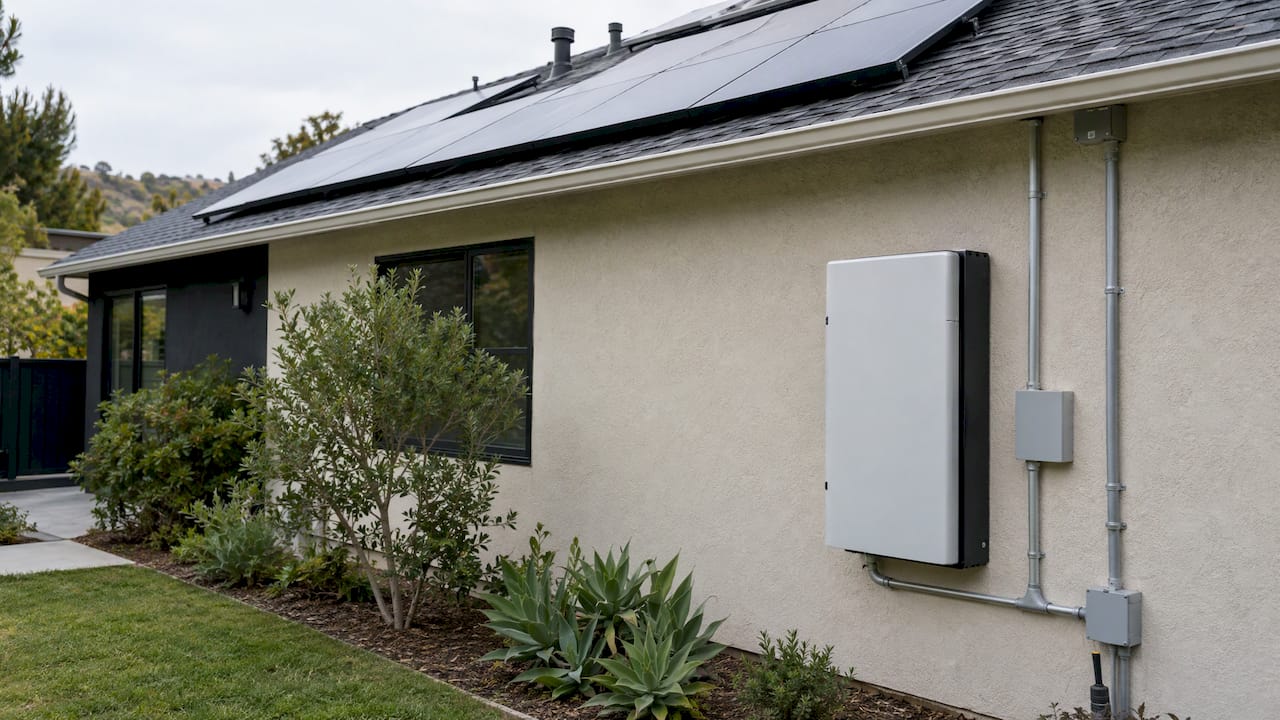
San Diego Solar installs Tesla Powerwall, Enphase IQ and Franklin WH batteries, and our battery storage service is priced at $12,000 to $16,000. Every system is custom designed by our in-house engineering team around your roof, your energy usage and your goals. We handle permitting, SDG&E interconnection and HOA approvals, so there is no paperwork for you to chase. If you want to understand how to match battery size to the loads you care about, our guide to whole-home backup sizing explains kilowatt-hours versus kilowatts in plain terms, and battery load shedding shows how a system prioritizes circuits so the essentials last longer.
A battery also earns its keep on ordinary days. We specialize in NEM 3.0 solar-plus-battery strategies that maximize self-consumption and reduce reliance on SDG&E peak rates, and the time-of-use guide on our site explains how rate windows affect when stored energy is most valuable. So the equipment that protects you in an outage is also working on your bill the rest of the year.
Generators and portable power stations: safe use
If you already own a generator or a portable power station, use it safely. SDG&E’s guidance is specific:
- Operate generators outdoors, at least 20 feet from the home, with exhaust directed away from it. The Red Cross likewise says never to use one indoors and to keep it at least 20 feet from windows.
- Never plug a generator into a household outlet.
- Permanent standby generators require a licensed electrician, and units with an automatic transfer switch require SDG&E review and approval.
- Follow the manufacturer’s instructions for portable power stations, keep units ventilated and dry, and observe load and cord ratings.
Carbon monoxide from a generator running in a garage or near a window is a real hazard, so keep this routine in your plan even if you add a battery later.
Safe battery installation
Any stored-energy system should be installed correctly. Our article on home battery safety covers what San Diego homeowners should know about placement and operation, which is one reason our crews do the work themselves: we use 100% in-house crews and no subcontractors.
What is changing with SDG&E backup-power programs
If you have been counting on a utility incentive to cover backup power, check the status first. According to SDG&E’s 2026 filing, its Generator Assistance Program offered rebates for portable fuel generators and portable power stations to customers in high-fire-threat areas who had experienced a PSPS, with enhanced rebates aimed at CARE/FERA and access-and-functional-needs customers. The same filing describes Customized Resiliency Assessments, a new program launching in 2026 to replace the Generator Grant Program, with individualized assessments, referrals to backup-power options and eligible loaner batteries during active events.
SDG&E’s Customer Resiliency Solutions page says the older program is closed to new enrollments while the new assessment offering is prepared, with the replacement anticipated in Q4 2026. Programs like this change often, so confirm eligibility and status on SDG&E’s pages before you plan around any rebate.
On the federal side, the 30% tax credit covers solar panels, battery storage and installation, and we walk through how it applies to your project during the free consultation. Our guide to home battery payback with incentives shows how the numbers work over time.
A weekend plan you can finish
Saturday morning (1 hour): Update SDG&E contact details, install the Alerts app, register with AlertSanDiego, and save the SDG&E outage number and 211 in your phone.
Saturday afternoon (2 hours): Buy or gather water, canned food, a can opener, radio, flashlights, batteries, a power bank and a fridge thermometer. Put copies of documents and a paper contact list in the kit.
Sunday (1 hour): Practice releasing the garage door and gate manually. Write down which circuits and devices you cannot do without, including anything medical. Decide whether your backup source is in place or still to come.
This month: Get a battery quote so the power plan is settled before the next fire-weather season.
Roof, battery and panel upgrades: a note on timing
A few homeowners find that their main electrical panel limits what can be added. Our write-up on same-day SDG&E reconnect for panel upgrades under SB 379 explains what that process involves. If your roof is due for replacement, doing roofing and solar with one crew under one warranty means the battery and panels go onto a finished roof, rather than being worked around later.
Backup power from San Diego Solar
We have installed solar in San Diego County since 1996, and we design, engineer, install and service the complete system: panels, a Tesla Powerwall, Enphase IQ or Franklin WH battery, and EV charging integration. Our battery storage service is priced at $12,000 to $16,000 and our residential solar systems at $24,500 to $70,000, with manufacturer warranties up to 25 years. Consultations are free and you receive a written project timeline before you commit.

If you already have panels and want to confirm they are performing, our repair and diagnostic service starts with a diagnostic visit at $150 to $250. For off-grid cabins, ADUs and backcountry properties, see our off-grid solar systems, with whole-home off-grid priced at $45,000 to $65,000.
Our perspective
Most outage advice stops at the flashlight and the water jugs, and that advice is right as far as it goes. But after 30 years of working on San Diego roofs, we think the real question is what happens on day two and day three, when the fridge is warming and the phones are dead.
Our answer is to treat backup power as part of the home’s energy system, not an accessory. A battery that is sized around your actual usage, wired to the circuits you care about and recharged by your own panels does not depend on fuel runs or on anyone being home to start it. It also works on your bill every day through NEM 3.0 self-consumption, so you are not buying insurance that sits idle.
That is why we keep the work in one set of hands. Our own engineers design the system, our own crews install it, and we handle the permits, the SDG&E interconnection and any HOA approval. If something needs attention in year ten, it is the same company that built it. One company. One crew. 30 years.
Curtis Williamson
FAQ
How long should I plan to be without power in San Diego?
Plan for at least three days. SDG&E says a PSPS can last from several hours to multiple days, and the Red Cross suggests stocking food and water for up to two weeks. Unplanned outages from storms or equipment failures are usually shorter, but you cannot know that in advance.
Will I get a warning before SDG&E shuts off power?
For a PSPS, alerts may begin about 48 hours ahead, with a follow-up around 24 hours ahead and a confirmation a few hours before shutoff. Timing depends on conditions. Keep your contact details current in your SDG&E account and install the Alerts app so you do not rely on a single channel.
How long will food last in the refrigerator?
SDG&E says a closed refrigerator may keep food cold for up to 24 hours and a freezer for up to 48. The Red Cross puts an unopened refrigerator at about four hours and a full freezer at about 48 hours. Discard perishables that have been above 40°F for more than two hours.
Where should a generator go?
Outdoors, at least 20 feet from the home, with exhaust pointed away. Never plug it into a household outlet. Permanent standby generators need a licensed electrician, and models with an automatic transfer switch need SDG&E review and approval.
Can solar panels and a battery keep my home running during an outage?
SDG&E lists solar with backup storage as a possible power source during outages. A battery stores energy from your panels and supplies the circuits you select. We design each system around your roof, usage and goals, and our free consultation is the place to decide which loads to back up.
Sources
- Power outage safety, SDG&E
- PSPS More Info, SDG&E
- Alerts by SDG&E
- Alert San Diego
- SDG&E fire and emergency preparedness booklet
- American Red Cross: Power Outage Safety
- City of San Diego power outage prep tips
- SDG&E planned outages
- SDG&E Access and Functional Needs
- SDG&E electric generators
- SDG&E 2026 AFN Plan quarterly update
- SDG&E Customer Resiliency Solutions