San Diego Homeowners: Can SGIP and the 30% Tax Credit Cut $11,000?
San Diego Homeowners: Can SGIP and the 30% Tax Credit Cut $11,000?
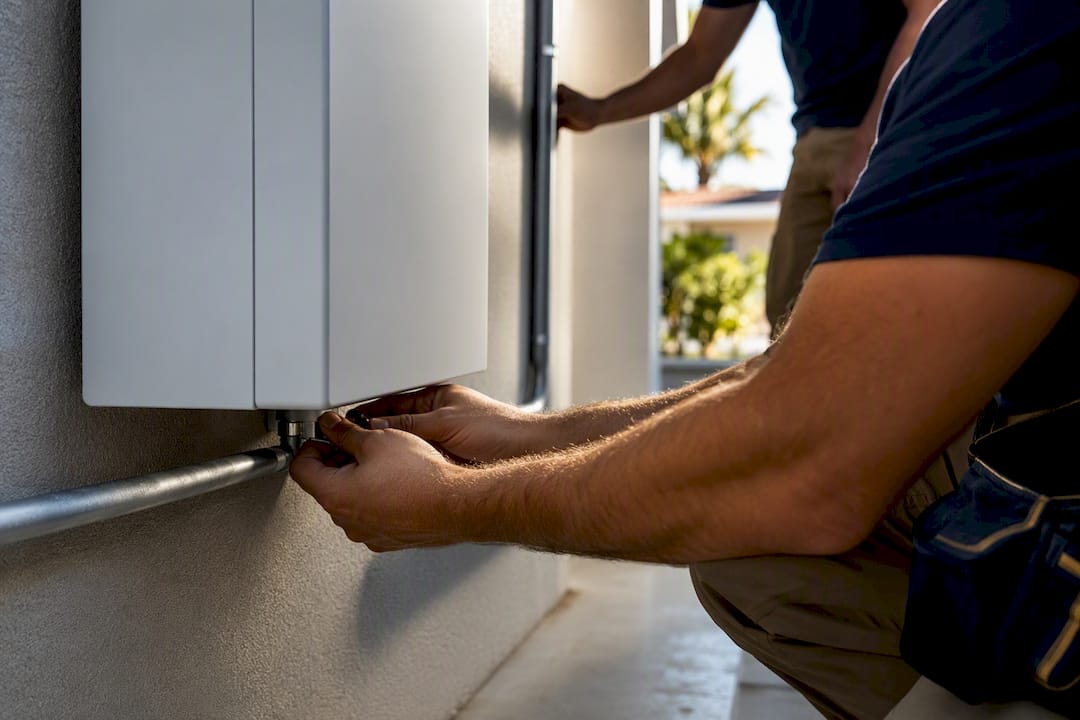
Yes, the SGIP battery rebate is active in California, and it pays homeowners a per-kWh incentive on qualifying home batteries, with the highest rates reserved for income-qualified households. You need to reserve funds through the program before installation begins, and most homeowners also claim the federal tax credit on top of it. Check your eligibility category first, then talk to an installer who can reserve your spot before you sign a contract.
TL;DR:
- The SGIP rebate rates for income-qualified households are around $1.10 per watt-hour, significantly increasing the rebate value for lower-income applicants.
- Funding availability varies by category and can close unexpectedly, so verifying current quotas and step levels before applying is essential.
- Eligibility depends on income levels, fire-risk or medical baseline status, utility territory, and early paperwork gathering, which can streamline the reservation process.
- The rebate covers a portion of the battery’s usable capacity, with larger systems potentially hitting size limits or needing load justification to qualify.
- Combining SGIP with the 30% federal tax credit generally reduces the battery’s overall cost, making storage more affordable for most homeowners.
Table of Contents
- What Does the SGIP Battery Rebate Actually Cover?
- Who Qualifies for a SGIP Rebate?
- How Much Is the SGIP Battery Rebate Worth?
- How Do You Apply for and Reserve SGIP Funds?
- Can You Combine SGIP With the Federal Tax Credit?
- What Happens During Installation and Final Verification?
- Why Local Installer Experience Actually Matters Here
- Get Your SGIP Reservation Filed Without the Runaround
- Where to Verify Current SGIP Rates and Budgets
- Sources
- FAQ
What Does the SGIP Battery Rebate Actually Cover?
The Self-Generation Incentive Program was built to keep the grid stable during outages and heat-driven demand spikes, and battery storage is now the program’s primary focus. The California Public Utilities Commission administers SGIP and funds both standalone battery storage and paired solar-plus-storage systems for single-family and multifamily homes.
Not every applicant draws from the same pot of money. SGIP splits its residential funding into distinct tracks, and which one you fall into determines your rebate rate and how fast your reservation gets funded:
- General Market: standard residential rate, open to most homeowners regardless of income.
- Equity: reserved for income-qualified households and those in disadvantaged communities.
- Equity Resiliency: the richest funding tier, aimed at medical baseline customers and residents in high fire-threat areas.
- Small Residential Storage: a simplified track for smaller systems under a defined kWh threshold.
Budgets for each category get allocated separately, and they can close without much warning. Before you get attached to a number, verify current funding status on the SGIP program metrics page, which tracks step levels and territory by territory.
Who Qualifies for a SGIP Rebate?
Eligibility hinges on which track you fall into, and the fastest way to find out is to run through a short checklist before you call an installer.
- Check your income against area median income. Equity and Equity Resiliency applicants typically need household income at or below a set AMI percentage; program administrators lean on tools like the HUD area median income dataset to confirm thresholds.
- Confirm your fire-risk or medical baseline status. Equity Resiliency applicants often qualify through Tier 2 or Tier 3 fire-threat zone addresses or documented medical baseline enrollment with their utility.
- Verify your utility territory. SGIP funding and step levels differ across San Diego Gas & Electric, Southern California Edison, and Pacific Gas and Electric service areas, so your rebate amount depends partly on where you live.
- Gather your paperwork early. Most reservations require a signed installation contract, proof of income or program enrollment for equity tracks, and a current utility account number.
Homeowners who already participated in programs like SASH, MASH, or SOMAH sometimes carry over income verification, which can shortcut the equity application. If you’re on the fence about which category applies, an installer who has filed dozens of these applications will usually spot it faster than you can on your own.
How Much Is the SGIP Battery Rebate Worth?
Rebate amounts are paid per kilowatt-hour of usable battery storage, not as a flat dollar figure, and the rate depends entirely on your category. The SGIP fact sheet lays out the equity-focused structure that gives lower-income households a meaningfully higher rebate than general-market applicants.
By the numbers: Program metrics show the Residential Solar and Storage Equity budget paying $1.10 per watt-hour of storage in active steps, well above what general-market applicants typically see.
A few things to keep in mind about how the math plays out in practice:
- Rates are quoted per kWh (or per Wh, depending on the table), and your total rebate scales with your battery’s usable capacity.
- Larger systems may hit size caps or require load justification tied to your home’s actual energy usage.
- Rates step down as each budget tier fills, so an approved reservation locks in your rate even if the posted number drops later.
Picture a 10 kWh battery under the Equity Resiliency track. At roughly $1.10 per watt-hour, that’s about $11,000 in rebate value stacked against the equipment cost before labor and permitting. General-market households pay for the same battery hardware but usually recover a smaller fraction of it. Numbers move, so treat any figure you read, including this one, as a snapshot rather than a guarantee.
How Do You Apply for and Reserve SGIP Funds?
Reserving your rebate is a sequence, not a single form, and skipping a step is the most common reason homeowners lose their place in line.
- Get a signed installation contract. SGIP requires a signed agreement with a licensed installer before you can reserve funds, so this comes before, not after, you lock in financing.
- Submit your reservation request. Your installer submits your paperwork through the program administrator’s portal, using the incentive calculator to estimate your exact rebate value based on your category and system size.
- Complete installation within the deadline. Once reserved, you generally have about one year to finish the installation before the reservation expires.
- File the Incentive Claim Form. After installation and utility interconnection, your installer submits final documentation, and the reservation FAQ outlines exactly what that packet needs to include.
Pro Tip: Ask about the Advanced Payment option if cash flow is tight. It releases part of the rebate before your project is fully complete, but it also adds extra milestone checkpoints, so it works best with an installer who has managed one before.
Missed paperwork, incomplete cost verification, or a lapsed one-year window are the most common reasons a reservation falls apart before the check does.
Can You Combine SGIP With the Federal Tax Credit?
Yes, and most homeowners should plan to. SGIP reduces your battery’s net cost first, and the 30% federal solar tax credit still applies to what’s left, whether the battery is paired with solar or installed standalone in most cases.
Run both numbers through your project financials before signing anything:
- SGIP lowers your eligible installed cost through the per-kWh rebate described above.
- The federal credit then applies to the remaining cost of equipment and labor.
- Some utility-specific or local incentives may also stack on top, depending on your service territory.
- Standalone battery installations and paired solar-plus-storage systems can be treated differently for federal credit purposes, so confirm the exact treatment with a tax professional or your installer before filing.
Layering rarely gets you to zero, but it consistently turns an expensive battery into a realistic line item in a home energy budget.
What Happens During Installation and Final Verification?
Once your reservation is locked in, the work shifts from paperwork to the physical install, and a few administrative steps run alongside it.
- Your installer schedules on-site metering and completes interconnection paperwork with your utility, whether that’s SDG&E, SCE, or PG&E.
- Larger systems, or homes in medical baseline or fire-threat categories, may need demand-response enrollment as part of the Equity Resiliency track.
- If your claimed cost approaches program maximums, expect the administrator to request detailed contractor invoicing and receipts before releasing final payment.
Pro Tip: Keep every invoice itemized by component, battery, inverter, labor, permitting, from day one. Vague “installation package” invoices are the single biggest cause of delayed SGIP payments.
A local crew that has filed these claims before tends to move faster through verification simply because they know what the administrator will flag before it becomes a problem.
Why Local Installer Experience Actually Matters Here
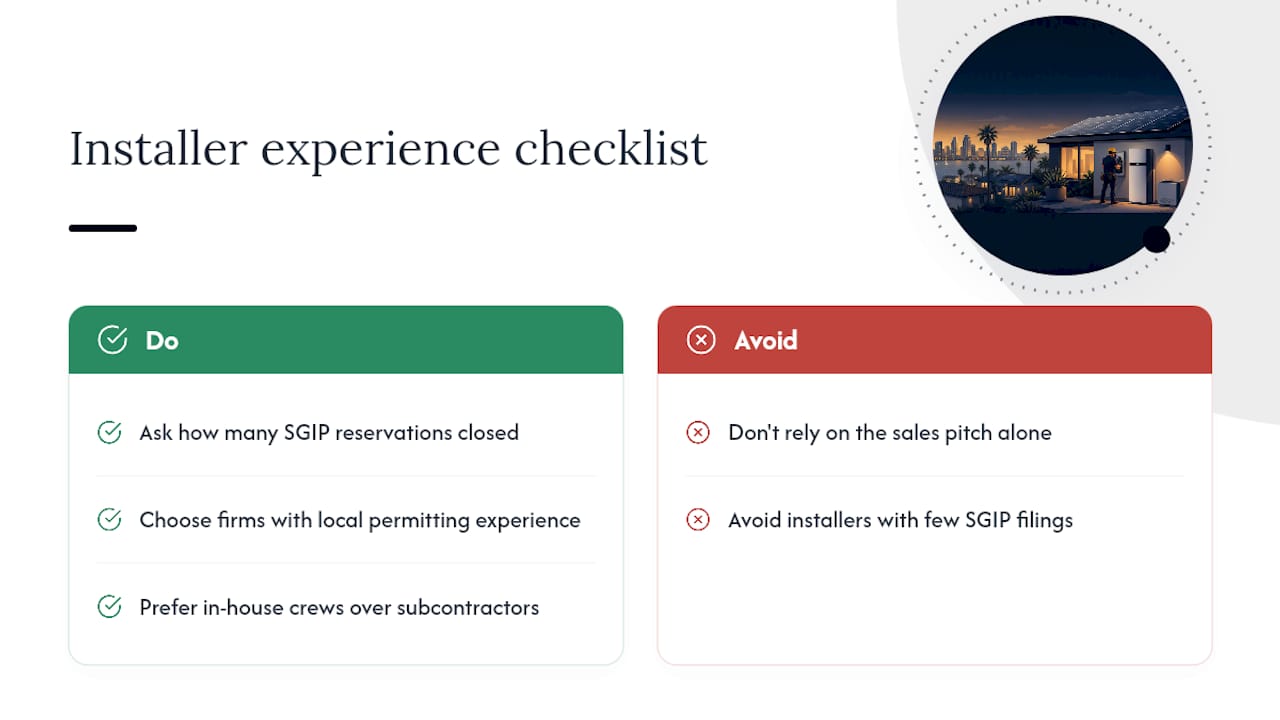
Homeowners underestimate how much of the SGIP process is administrative rather than technical. Anyone can bolt a battery to a wall. Far fewer installers have filed enough reservations, interconnection packets, and Incentive Claim Forms to know which documentation gets kicked back and why.
San Diego Solar has built that muscle over three decades of permitting and interconnecting systems across San Diego County, using in-house crews rather than subcontractors, which cuts out the handoff delays that trip up reservations. Ask any installer bidding on your project how many SGIP reservations they’ve filed and closed, not just quoted. That answer tells you more than the sales pitch does.
— Curtis Williamson
Get Your SGIP Reservation Filed Without the Runaround
Some installers handle the parts of the SGIP process most homeowners find intimidating: the reservation paperwork, the interconnection filing, and the final claim documentation, reducing the burden on the homeowner.

Before you request a quote, pull together your most recent utility bill, your account number, and a couple of photos of your roof or electrical panel. That’s usually enough for our team to start on eligibility and pricing. Explore battery storage installation options, or if you’re planning a paired system, look at residential solar alongside it. Ready to see where you land? Request a free quote and eligibility review and we’ll tell you straight whether your project qualifies and for how much.
Where to Verify Current SGIP Rates and Budgets
Rebate rates and category budgets shift often, so verify them directly before you reserve anything. Start with the CPUC’s SGIP program page for program rules, the SelfGenCA program metrics table for current step levels, and the reservation FAQ for documentation requirements. These pages are updated far more often than any blog post, including this one.
Sources
FAQ
Is the SGIP Rebate Still Available?
Yes, SGIP is active and funding residential battery storage across California, though budgets for specific categories can close and reopen as they get depleted. Check the program metrics page for real-time status before assuming your category is open.
Is the SGIP Program Worth It for a San Diego Homeowner?
For most homeowners, yes, especially when SGIP is layered with the federal tax credit, since the combination typically covers a meaningful share of battery costs. Equity-qualified households see the strongest return, given the higher per-kWh rate outlined in the SGIP fact sheet.
Who Qualifies for a SGIP Rebate?
General-market homeowners qualify by installing a battery through a licensed installer and reserving funds before the project starts. Equity and Equity Resiliency applicants additionally need to meet income limits or live in a qualifying fire-threat or medical baseline category, verified through tools like the HUD income dataset.
Which State Has the Best Solar Incentives?
California pairs SGIP’s equity-focused battery rebates with the 30% federal tax credit, giving it one of the more layered incentive structures in the country for storage specifically. Other states offer their own rebates and net metering rules, but California’s combination of a dedicated storage program and strong equity funding is fairly distinct nationally.
How Much Does a Home Battery Cost With San Diego Solar After Incentives?
San Diego Solar’s battery storage installations run $12,000 to $16,000 before incentives, with your final out-of-pocket cost depending on your SGIP category and eligibility for the federal tax credit. Request a free quote to see your exact numbers based on your utility, address, and household income category.