Signs a Solar Installer Is Trustworthy in 2026
Signs a Solar Installer Is Trustworthy in 2026
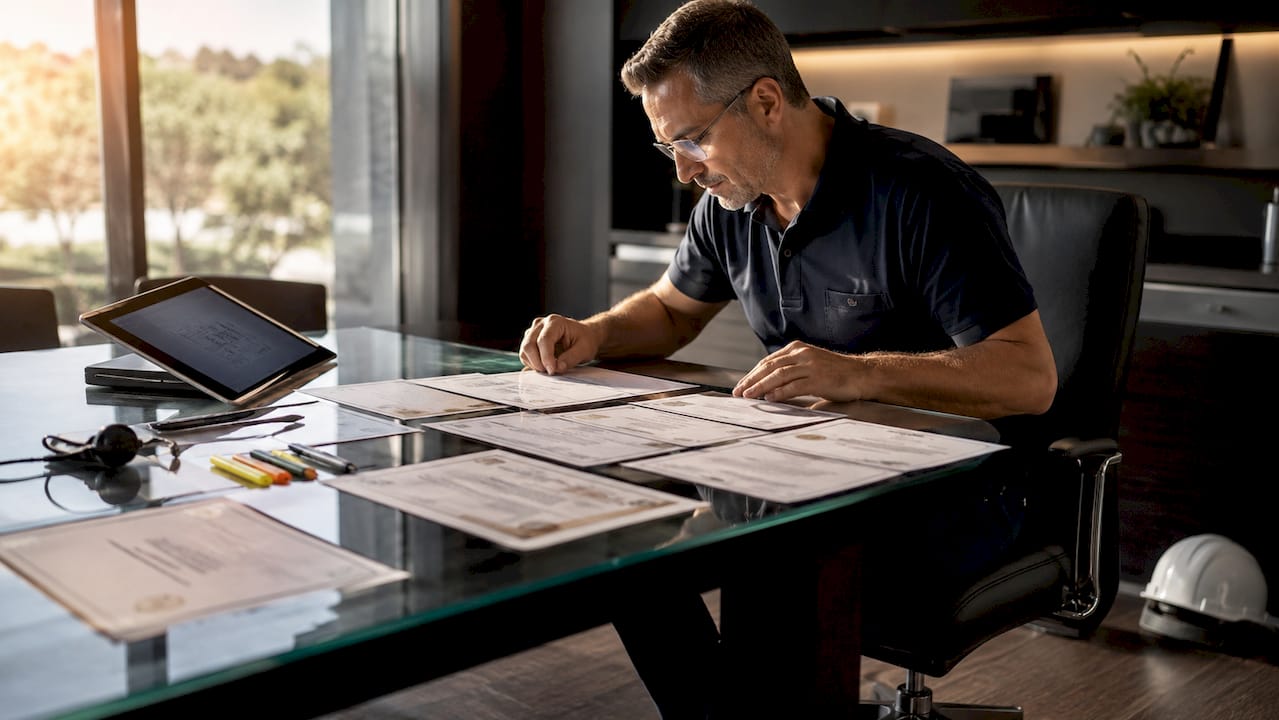
A trustworthy solar installer is defined by verifiable credentials, transparent pricing, and a proven track record that protects your home investment for decades. The signs a solar installer is trustworthy go beyond a polished website or a low bid. They show up in state licenses, NABCEP certification, detailed written quotes, and the kind of post-installation support that keeps your system running at full output for 25 years. This guide gives you the exact checklist to vet any installer before you sign anything.
1. valid state licenses and NABCEP certification
Trustworthy solar installers hold state-specific licenses and NABCEP PV Installation Professional certification as the baseline standard in 2026. These are not optional extras. They are the floor.
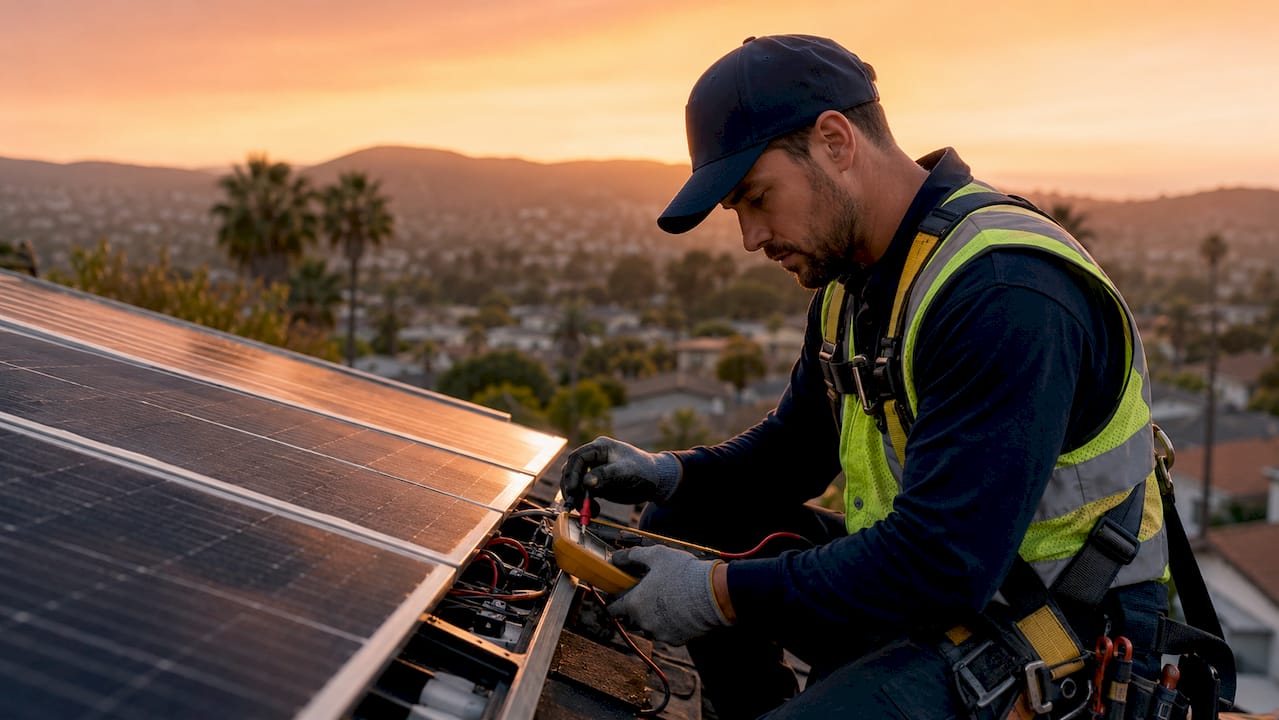
In California, solar installers must carry a C-10 (Electrical) or C-46 (Solar) contractor license issued by the California Contractors State License Board. You can verify any license number in minutes at the CSLB website. An installer who cannot produce a current license number on request is a red flag, not a minor oversight.
NABCEP certification goes further than state licensing. It requires passing a rigorous exam, documenting field experience, and completing continuing education. It signals that the installer has been tested against national technical standards, not just local minimums.
- Verify the license number directly on the CSLB website, not from a printed card the sales rep hands you
- Confirm NABCEP credentials at the official NABCEP directory at nabcep.org
- Ask which specific crew members hold certifications, not just the company owner
Pro Tip: Ask the installer to name the licensed electrician who will sign off on your permit. If they hesitate or give a vague answer, the work may be done by unlicensed subcontractors.
2. confirmed insurance coverage
Reliable solar companies carry current certificates of insurance for general liability at a minimum of $1 million coverage and workers’ compensation for every crew member on your roof. This protects you from liability if a worker is injured on your property.
The critical detail most homeowners miss: printed certificates from a sales rep can be outdated or altered. Call the insurance carrier directly to confirm the policy is active before work begins. A legitimate installer will not hesitate to provide the carrier’s contact information.
Workers’ compensation coverage is equally non-negotiable. Without it, an injured worker can file a claim against your homeowner’s insurance. That is a financial exposure no solar savings will offset.
3. proven business history and BBB rating
Reputable installers have 5–10 or more years of continuous operation, an A or A+ BBB rating, and use in-house installation crews rather than subcontractors. Business longevity is not just a marketing point. It is a risk filter.
The solar industry has seen multiple boom-and-bust cycles. Companies that launched during the 2010–2015 solar rush and closed shortly after left thousands of homeowners as “solar orphans,” meaning their installer was gone and their warranty was worthless. An installer with 10 or more years of continuous local operation has survived at least one industry downturn.
Check the BBB profile for complaint history, not just the letter grade. A company with an A+ rating but 40 unresolved complaints in two years tells a different story than the grade alone suggests. Read the actual complaint text to identify patterns around installation delays, billing disputes, or ignored service calls.
- Confirm the company’s founding date through state business registration records, not their website
- Search the company name plus “complaints” or “reviews” on Google, Yelp, and the BBB
- Ask how many installations they have completed in your specific city or neighborhood
4. in-house crews with zero subcontractors
The use of in-house installation crews is one of the most reliable quality indicators in residential solar. When a company subcontracts your installation, accountability splits between two businesses. If something goes wrong, each points to the other.
In-house crews work under the installer’s direct supervision, follow the installer’s quality standards, and carry the installer’s insurance. They also build institutional knowledge about local roof types, utility interconnection requirements, and permit office expectations. That knowledge directly affects how cleanly and quickly your project gets done.
Ask the installer directly: “Will your employees install my system, or will you hire a subcontractor?” The answer should be immediate and unambiguous. Vague answers like “we use trusted partners” mean subcontractors.
5. detailed, itemized quotes from at least 3 installers
Homeowners should request at least 3 quotes that specify equipment brands, panel models, inverter types, labor costs, permit fees, and warranty terms. A single-page quote with a total dollar amount is not a proposal. It is a placeholder.
A trustworthy installer provides a quote that names the exact panel brand and model (such as REC Alpha, Panasonic EverVolt, or Qcells Q.Peak), the inverter manufacturer (such as Enphase IQ or SolarEdge), and the projected annual energy output in kilowatt-hours. That output number is what you are actually buying. Compare it across quotes, not just the price.
Local installers often offer 10–20% better pricing than national chains, according to solar cost research. They also tend to have stronger relationships with local permit offices and utility interconnection teams, which speeds up your project timeline.
Pro Tip: Ask each installer to show you the production estimate methodology. A trustworthy company uses your actual utility bills and a shading analysis tool like Aurora Solar or Helioscope, not a generic square-footage formula.
| Quote Element | What to Look For |
|---|---|
| Equipment specs | Named brand, model, and wattage for panels and inverters |
| Labor costs | Broken out separately from equipment costs |
| Permit fees | Listed as a line item, not buried in a total |
| Production estimate | Annual kWh output based on your actual roof and usage |
| Warranty terms | Workmanship and manufacturer warranties listed separately |
6. clear workmanship and manufacturer warranty terms
Workmanship warranties backed by third-party insurance survive company closure, unlike standard workmanship warranties supported solely by the installer. This distinction matters more than most homeowners realize.
A manufacturer warranty covers the panels and inverters if they fail due to a product defect. A workmanship warranty covers the installation itself, including roof penetrations, wiring, and mounting hardware. These are two completely different protections. A 25-year panel warranty does nothing for you if your roof leaks because the mounting was done incorrectly.
A workmanship warranty covering roof penetrations for at least 10 years is the minimum standard to protect against moisture damage that may not appear for several years. If an installer offers only a 1 or 2-year workmanship warranty, that is a red flag. Ask specifically: “Is your workmanship warranty backed by a third-party insurer, or only by your company?”
7. no high-pressure sales tactics
High-pressure sales tactics are the primary behavioral red flag that separates unreliable installers from trustworthy ones. “Decide today or lose this price” is a volume-sales technique, not a professional practice.
Trustworthy installers give you time to review the proposal, compare quotes, and ask follow-up questions. They do not manufacture urgency. They do not call you five times in 48 hours. They do not tell you the federal tax credit is “about to expire” to pressure a signature. The 30% federal Investment Tax Credit has been extended multiple times and is currently available through 2032.
A professional installer welcomes your questions. They expect you to get other quotes. They provide references without being asked. That confidence comes from knowing their work holds up to scrutiny.
8. transparent communication about the full process
Strong customer service and communication after installation are key trust indicators. Weak installers lack dedicated service departments and go quiet once the check clears.
A trustworthy installer explains the full timeline before you sign: design, permitting, installation, inspection, and SDG&E interconnection. They tell you who handles each step and how long each phase takes. They provide a written project timeline, not a verbal estimate.
Post-installation, they have a real phone number that reaches a real service team. They respond to monitoring alerts. They show up when a panel underperforms. That service infrastructure is what separates a 30-year company from a 3-year startup.
9. proper solar PV labeling and code compliance
Approximately 25% of residential solar inspections fail due to missing or incorrect labeling. That failure rate is a proxy for how many installations are done without rigorous attention to code compliance.
NEC Article 690 mandates specific safety labels and placards on solar PV systems, including disconnect labels, voltage ratings, and emergency responder information. These labels are not decorative. They exist so firefighters and utility workers can safely interact with your system in an emergency.
The presence of required safety labels during inspection is a reliable indicator of a code-compliant, professional installation. Ask your installer to walk you through the labeling requirements they follow. A knowledgeable answer signals they take code compliance seriously across the entire installation.
| Labeling Requirement | Purpose |
|---|---|
| DC disconnect label | Identifies shutoff location for emergency responders |
| Voltage and current ratings | Prevents electrical hazards during service |
| Rapid shutdown label | Required for firefighter safety on rooftop systems |
| Utility interconnection placard | Confirms system is grid-tied and metered correctly |
10. verifiable local references
Poor installation quality can reduce long-term energy output by 10–20% and create risks including roof leaks and electrical hazards. The best way to verify an installer avoids these outcomes is to speak with their past customers directly.
Ask the installer for three references from installations completed in the past two years, in your city or neighborhood. Then call them. Ask whether the system produces what was promised, whether the installer responded promptly to any issues, and whether they would hire the same company again.
Online reviews on Google and Yelp are useful, but a direct conversation with a reference reveals details that no review captures. A trustworthy installer provides references without hesitation. An installer who deflects or offers only testimonials on their own website is signaling something.
Key takeaways
A trustworthy solar installer is identifiable before you sign by verifiable credentials, transparent quotes, in-house crews, and warranty terms backed by more than just a company promise.
| Point | Details |
|---|---|
| Verify licenses and NABCEP | Confirm state license and NABCEP credentials directly, not from sales materials. |
| Require in-house crews | Subcontractors split accountability; in-house crews answer to one company. |
| Get 3 itemized quotes | Compare equipment specs and production estimates, not just total price. |
| Demand 10-year workmanship warranty | Roof penetration damage appears years later; short warranties leave you exposed. |
| Reject pressure tactics | Trustworthy installers give you time and welcome competing quotes. |
What 30 years in san diego taught me about vetting solar companies
Most homeowners focus on price. I understand why. Solar is a significant purchase. But in three decades of watching this industry, the homeowners who regret their solar decisions almost never regret paying more. They regret choosing a company that disappeared, subcontracted the work to an unlicensed crew, or handed them a warranty that was worthless the day the installer closed.
The “solar orphan” problem is real and it is underreported. When a solar company closes, your manufacturer warranty on the panels stays intact. But your workmanship warranty, the one that covers roof penetrations and wiring, evaporates. If your roof leaks two years after installation because the mounting was done wrong, you are on your own. That is why I tell every homeowner: ask whether the workmanship warranty is backed by a third-party insurer before you sign anything.
The other thing I have learned is that in-house crews are not just a quality preference. They are a liability filter. When a company uses subcontractors, the homeowner becomes the de facto project manager trying to figure out who is responsible when something goes wrong. One company, one crew, one point of contact changes that dynamic entirely.
Finally, do not underestimate how much a company’s local reputation tells you. A company that has been operating in the same city for 10 or more years has a track record you can actually check. Their neighbors know them. Their permit office knows them. Their utility interconnection team knows them. That local accountability is worth more than any national brand name.
— Curtis Williamson
Why san diego solar is the trustworthy choice for your home
San Diego Solar has been installing residential solar in San Diego County since 1996, making it the longest-running solar company in the region. Every installation is completed by a 100% in-house crew with zero subcontractors, backed by a licensed engineering team that custom designs each system to your roof, your usage, and your goals. San Diego Solar provides written project timelines, fully itemized quotes, and manufacturer warranties up to 25 years. For homeowners ready to move forward with a company that has outlasted every industry shakeout in California, get a free solar quote and see exactly what a trustworthy installation looks like from day one.
FAQ
What certifications should a solar installer have?
A trustworthy solar installer holds a state contractor license (C-10 or C-46 in California) and NABCEP PV Installation Professional certification. Verify both credentials directly through the CSLB website and the NABCEP directory.
How do i spot red flags in solar contractors?
High-pressure “decide today” sales tactics, vague subcontractor answers, and workmanship warranties under 5 years are primary red flags. Legitimate installers welcome competing quotes and provide references without being asked.
What warranty should a solar installer offer?
A reliable installer provides a manufacturer warranty of up to 25 years on panels and a workmanship warranty covering roof penetrations for at least 10 years. Workmanship warranties backed by third-party insurance survive company closure.
Why does it matter if a solar company uses in-house crews?
In-house crews work under direct supervision, follow consistent quality standards, and create a single point of accountability. Subcontracted installations split responsibility between two companies, which complicates warranty claims and service calls.
How many solar quotes should i get before deciding?
Get at least 3 detailed, itemized quotes that specify panel brands, inverter models, labor costs, permit fees, and projected annual energy output. Comparing production estimates, not just prices, is the most reliable way to evaluate competing proposals.