Solar Incentives Expiring Soon: 2026 Homeowner Guide
Solar Incentives Expiring Soon: 2026 Homeowner Guide
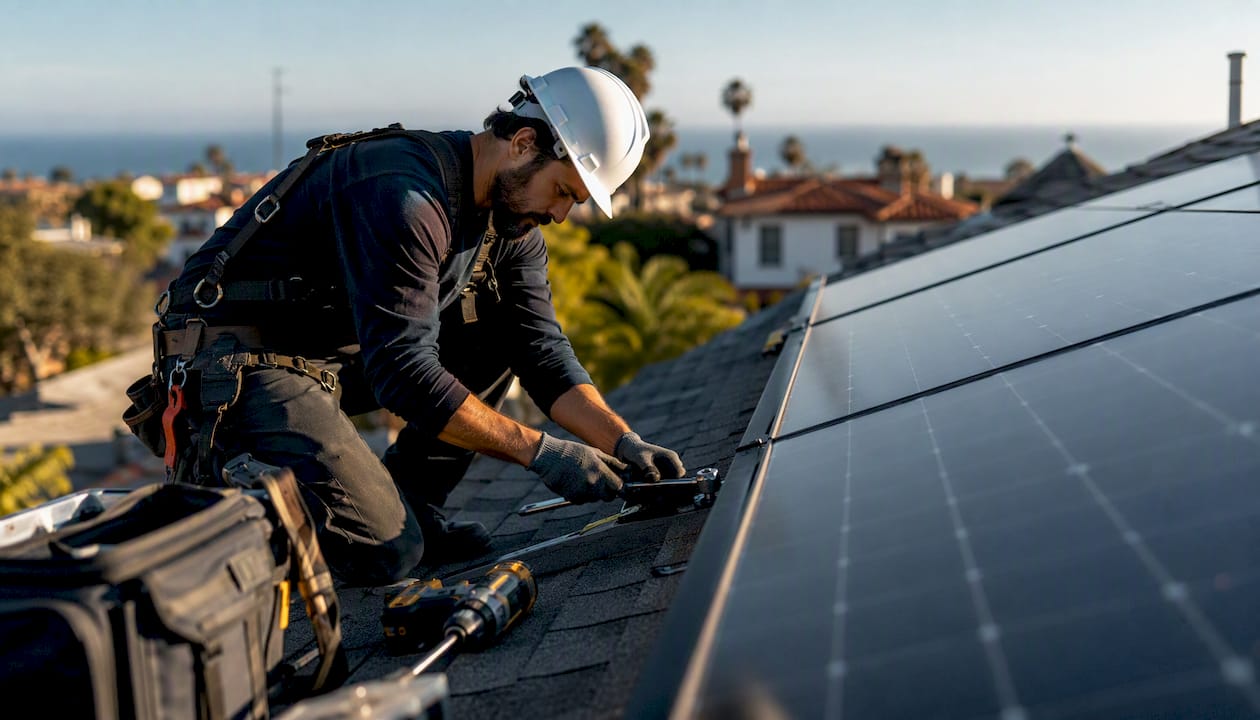
The federal Residential Clean Energy Credit under §25D is gone for homeowner-owned installations completed after December 31, 2025. That credit covered solar panels, battery storage, inverters, and installation labor. If your system was up and running before that date, file Form 5695 with your 2025 tax return and claim every dollar. If it wasn’t, the homeowner path to that credit is closed. No transition rule, no grace period for contracts signed in 2025.
The types of solar incentives expiring soon don’t stop at the federal level. California’s active solar energy system property tax exclusion sunsets January 1, 2027. The Self-Generation Incentive Program’s general market budgets are closed. Net Energy Metering shifted to NEM 3.0, which changes how exports are compensated. Each of these has its own deadline, eligibility rules, and documentation requirements.
Here’s what matters most right now:
- Federal §25D credit: Expired for homeowner-owned systems completed after December 31, 2025. Claim it on your 2025 return if your install finished in time.
- California property tax exclusion (Revenue & Taxation Code §73): Applies to systems completed before January 1, 2027. After that date, the exclusion becomes inoperative unless the legislature acts.
- SGIP general market: Closed to new general-market applicants; DAC-SASH and RSSE waitlists remain active for qualifying low-income households.
- §48E (business/third-party credit): Still available for third-party-owned systems; homeowners under leases or PPAs may still benefit indirectly.
Your single highest-priority action: confirm your installation completion date with your installer, gather your final invoice and permit sign-off, and file Form 5695 with your 2025 return if your system qualified.
Key Takeaways
The federal §25D homeowner solar credit expired after December 31, 2025, and no signed-contract transition rule exists — your installation completion date is the only date that matters.
| Point | Details |
|---|---|
| §25D expired for homeowners | Systems completed after Dec. 31, 2025 receive no federal residential credit; file Form 5695 for 2025 installs. |
| §48E keeps a federal pathway open | Third-party-owned systems (leases, PPAs) can still access federal credits; homeowners benefit only if the contract passes savings through. |
| California property tax exclusion | Revenue & Taxation Code §73 becomes inoperative Jan. 1, 2027; complete your system before that date to lock in the exclusion. |
| Documentation is non-negotiable | Keep your final invoice, permit sign-off, and PTO letter — these three documents determine whether your claim survives an IRS review. |
| San Diego Solar | Handles permitting, inspection coordination, and SDG&E interconnection in-house to keep projects on schedule for remaining incentive deadlines. |
Table of Contents
- 1. The federal §25D credit has expired for homeowners — here’s exactly what that means
- 2. How third-party ownership under §48E still keeps a federal credit alive
- 3. California-specific incentives still have deadlines you need to track
- 4. How to make sure your project qualifies before a deadline
- 5. How rebates and utility incentives affect your federal credit calculation
- 6. What San Diego Solar sees homeowners get wrong about these deadlines
- San Diego Solar helps you meet deadlines and manage the paperwork
- Sources
1. The federal §25D credit has expired for homeowners — here’s exactly what that means
The Residential Clean Energy Credit gave homeowners a percentage of the cost of qualified clean energy property installed from 2022 through December 31, 2025. Solar electric panels, solar water heaters, geothermal heat pumps, small wind turbines, fuel cells, and battery storage systems of at least 3 kWh (eligible starting in 2023) all counted. The credit applied to equipment and installation labor combined.
The statutory termination language in 26 U.S.C. §25D is written against “expenditures made” after December 31, 2025. The IRS interprets that to mean the installation completion date controls, not the contract date or deposit date. Paying in full in October 2025 for a system that doesn’t get its final inspection until February 2026 does not preserve the credit. The IRS FAQ on the One Big Beautiful Bill Act makes this explicit: there is no signed-contract transition rule.
What “placed in service” actually means for your claim: The IRS treats a residential system as placed in service when installation is complete and the system is operational. For solar, that typically means the utility has issued Permission to Operate (PTO). If your PTO letter is dated before the end of 2025, you qualify. If it’s dated in 2026, you do not.
Claiming the credit and carrying it forward: File Form 5695 with your 2025 federal return. If the credit exceeds your tax liability for the year, the unused portion carries forward to future tax years. You don’t lose it. But you do need to file the form and keep documentation: final invoice with a completion date, permit final sign-off, and PTO or interconnection approval from your utility.
Pro Tip: If your 2025 credit exceeds your tax liability, attach Form 5695 to your return anyway and carry the balance forward. The IRS FAQ confirms the carryforward mechanism still applies to unused 2025 credits, so don’t skip the form just because you can’t use the full amount this year.
The Energy Efficient Home Improvement Credit under §25C followed the same termination schedule. Heat pumps, insulation, and efficient windows installed after December 31, 2025 no longer qualify under that credit either.
2. How third-party ownership under §48E still keeps a federal credit alive
When a homeowner leases a solar system or signs a power purchase agreement (PPA), the system owner, not the homeowner, claims the federal credit. Under §48E, the commercial clean electricity investment credit, third-party owners of residential solar systems can still access federal credits. The homeowner doesn’t claim anything on their return, but the credit is supposed to be priced into the lease rate or PPA rate, making the monthly payment lower than it would otherwise be.
Public Law 119-21 preserved §48E for commercial and third-party-owned projects while terminating the homeowner §25D pathway. The construction-begin and placed-in-service rules under §48E differ from §25D, and a July 4, 2026 begin-construction safe-harbor applies to certain §48E benefits. If you’re evaluating a lease or PPA in 2026, the provider’s ability to claim §48E depends on when construction begins and when the system is placed in service under those commercial rules.
What to ask any lease or PPA provider:
- Does the contract pricing reflect the federal §48E credit? By how much does it reduce your monthly payment?
- Who owns the Renewable Energy Certificates (RECs) generated by the system?
- Does the contract include a construction safe-harbor date, and what happens if that date is missed?
- What are the early termination terms if you sell your home?
- Is the system eligible for SGIP or other California incentives, and who captures those?
| Factor | Homeowner-owned (§25D) | Third-party-owned (§48E) |
|---|---|---|
| Who claims the credit | Homeowner | System owner (installer/lessor) |
| Equipment covered | Solar PV, battery ≥3 kWh, solar water heaters, geothermal, small wind, fuel cells | Solar PV and battery storage (commercial rules) |
| Credit rate | 30% (for 2025 installs) | Varies by project; base rate plus adders |
| Deadline status | Expired for installs after Dec. 31, 2025 | §48E continues; begin-construction safe-harbor July 4, 2026 |
| Homeowner benefit | Direct tax credit on return | Indirect, through lower lease/PPA payments |
The critical question with any “credit-backed” lease offer is whether the savings are real and contractually guaranteed. Ask for the specific dollar amount the credit reduces your monthly payment, and get it in writing. Vague claims that “federal incentives are built in” are not the same as a stated rate reduction.
Third-party ownership remains the pragmatic pathway for a federal credit on residential systems now that homeowner §25D has ended, but the value only reaches you if the contract actually passes it through.
3. California-specific incentives still have deadlines you need to track
California homeowners have more to watch than just the federal credit. Several state and utility programs are either time-limited, funding-constrained, or actively changing how they compensate solar production.
Property tax exclusion (Revenue & Taxation Code §73)
California’s active solar energy system property tax exclusion prevents a solar installation from triggering a reassessment of your home’s value for property tax purposes. Under current law, this exclusion becomes inoperative on January 1, 2027, unless the legislature extends it. Systems completed before that date keep the exclusion until the property next changes ownership. Storage is included. The completion date, not the contract date, determines whether you qualify.
This is one of the most consequential time-limited incentives for San Diego homeowners because it affects your property tax bill every year you own the home. A system that adds to your home’s assessed value at the applicable property tax rate could increase your annual taxes accordingly. Over a 20-year ownership period, that adds up. Completing your system before January 1, 2027 is worth planning around.
SGIP, DAC-SASH, and SOMAH
The Self-Generation Incentive Program’s general market budget is closed to new applicants. The Residential Solar Energy System Equity (RSSE) waitlist and the Disadvantaged Communities Single-family Affordable Solar Homes (DAC-SASH) program remain active for qualifying low-income households, with DAC-SASH active through 2030. SOMAH (Solar on Multifamily Affordable Housing) serves multifamily affordable housing and is a separate track.
NEM 3.0 and export compensation
California moved from NEM 2.0 to NEM 3.0 net billing in 2023. Under NEM 3.0, export compensation rates are lower than retail electricity rates, which changes the economics of solar-only systems significantly. Battery storage paired with solar is now the standard approach for San Diego homeowners who want to maximize self-consumption and reduce reliance on SDG&E’s peak rates. The NEM 3.0 rules are not expiring, but they represent a permanent shift in how solar economics work in California.

Pro Tip: When federal credits are no longer available, state and utility incentives become your primary financial lever. SGIP RSSE and DAC-SASH funds are limited and distributed on a first-come, first-served basis. Check program status directly with the CPUC or your utility before assuming you qualify.
Where to check program status: the CPUC website, the California Energy Commission, your utility’s solar program page (SDG&E for San Diego homeowners), and the IRS for federal credit rules.
4. How to make sure your project qualifies before a deadline
The difference between claiming a credit and missing it often comes down to a few weeks of scheduling. Here’s the timeline that matters, with the milestones that determine your eligibility date.
-
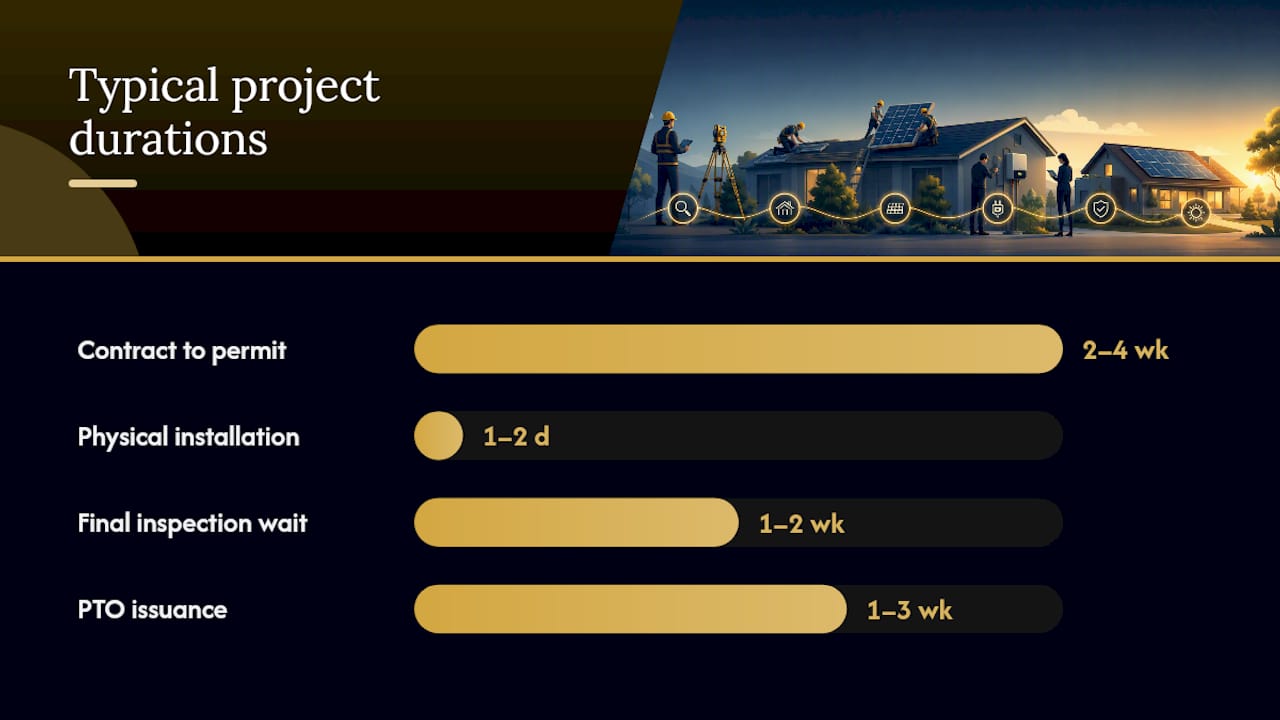
Sign the contract and pay your deposit. This starts the clock on permitting. Lead time from contract to permit approval in San Diego County typically runs two to four weeks, depending on the jurisdiction and system complexity.
-
Permit approval. Your installer pulls the permit. For San Diego homeowners, this involves the city or county building department. Systems with battery storage sometimes require additional review.
-
Installation day. For most residential systems, physical installation takes one to two days with an experienced crew. The install date is not the qualifying date for federal credits.
-
Final inspection. A building inspector must sign off on the completed system. This is a separate appointment from installation and can add one to two weeks depending on inspector availability.
-
Utility interconnection and PTO. After the final inspection, your installer submits interconnection paperwork to SDG&E. PTO issuance typically takes one to three weeks. The PTO date is generally the date the IRS treats the system as placed in service.
-
Final invoice. Your installer issues a final invoice reflecting the completed installation. This document, combined with the permit final and PTO letter, is your core documentation package.
What to collect and store:
- Final invoice with a clearly stated completion date
- Permit final sign-off or certificate of completion
- Utility PTO or interconnection approval letter
- Payment records (bank statements, check copies, or credit card statements)
- Installer contract and warranty documentation
Filing your return: Attach Form 5695 to your 2025 federal return. The form asks for the total cost of qualified property placed in service during the tax year. If your credit exceeds your liability, the carryforward amount goes on the same form and rolls to your 2026 return automatically.
Pro Tip: Ask your installer for a written project timeline before you sign, including estimated permit, inspection, and PTO dates. A reputable installer can give you a realistic completion window. If the timeline puts your PTO date in January 2026 or later, you need to know that before you commit, not after.
Edge cases worth knowing: adding a battery to an existing solar array may qualify as a separate §25D expenditure if the battery meets the 3 kWh minimum and installation completed by December 31, 2025. Phased systems and partial installs are evaluated on the completion date of each component, not the overall project. Confirm the specifics with a tax professional for your situation.
For guidance on evaluating installer qualifications and whether a proposed timeline is realistic, ask direct questions about their permit and inspection track record.
5. How rebates and utility incentives affect your federal credit calculation
The IRS has a specific rule about subsidies: if a public utility provides a subsidy for the purchase or installation of an energy conservation measure, that subsidy is subtracted from your qualified expenses before you calculate the credit. The IRS guidance on the Residential Clean Energy Credit states this directly. The practical effect is that a utility rebate reduces your eligible basis, which reduces your credit.
A worked example: Suppose you install a solar plus battery system with a total cost of $30,000. Your utility provides a $3,000 rebate. Your qualified basis for the §25D credit is $27,000, not $30,000. At 30%, that’s an $8,100 credit instead of $9,000. The rebate saves you $3,000 upfront but costs you $900 in federal credit. Net benefit of the rebate: $2,100.
This math matters when you’re comparing installer quotes that include rebates versus quotes that don’t. An installer who applies a utility rebate to reduce your invoice price before calculating the credit is handling it correctly. One who quotes the credit on the gross price and then separately applies the rebate may be overstating your credit.
Pro Tip: Ask your installer specifically: “Which rebates are being applied to the installed price, and are those rebates subtracted before you calculate my federal credit?” Get the answer in writing. A $3,000 rebate that reduces your credit basis by $3,000 has a different net value than one that doesn’t.
One important nuance: not all government-administered rebates are treated as purchase-price adjustments. Some state-administered rebates are structured differently and may not reduce your federal credit basis. The program language matters. Check the specific rebate program’s documentation and confirm with a tax professional before assuming either outcome.
6. What San Diego Solar sees homeowners get wrong about these deadlines
The most common mistake isn’t missing the deadline itself. It’s assuming the contract date or the deposit date locks in the credit. Homeowners sign in October, pay in November, and assume they’re covered. Then the permit takes longer than expected, the inspection gets pushed, and the PTO letter arrives in January. The credit is gone.
The second most common mistake is not pairing storage with a new solar system under NEM 3.0. Without a battery, a San Diego solar system exports power to SDG&E at NEM 3.0’s lower export rates during the day and buys it back at peak rates in the evening, highlighting the many benefits of electric vehicles such as integration with solar and battery storage. The economics of solar-only systems are materially weaker than they were under NEM 2.0. A battery storage system like the Tesla Powerwall, Enphase IQ, or Franklin WH changes that equation by storing midday production for evening use.
San Diego Solar coordinates directly with county inspectors and SDG&E on interconnection to reduce the gaps between installation, inspection, and PTO. With an in-house crew handling every step, there’s no handoff between a sales company and a subcontractor that adds weeks to the timeline. For homeowners racing a deadline, that matters.
A note for anyone reading this as tax guidance: it isn’t. Confirm your specific situation with a qualified tax professional before filing Form 5695 or making decisions based on credit eligibility. The rules above reflect current IRS guidance and statutory language, but individual circumstances vary.
San Diego Solar helps you meet deadlines and manage the paperwork
With the federal §25D credit gone for new homeowner installs, the remaining financial case for solar in San Diego rests on California’s property tax exclusion (deadline: January 1, 2027), NEM 3.0 battery strategies, and long-term protection against SDG&E rate increases. San Diego Solar handles every step in-house: engineering, permitting, installation, inspection coordination, and SDG&E interconnection. No subcontractors, no handoffs, no timeline surprises.

For homeowners who need to complete a system before the California property tax exclusion sunsets, or who want to pair storage with an existing array under NEM 3.0, San Diego Solar offers a written project timeline before you commit. That timeline includes estimated permit, inspection, and PTO dates so you know exactly where you stand before signing anything.
San Diego Solar does not provide tax advice. For Form 5695 filing, credit carryforward questions, or how rebates affect your eligible basis, consult a qualified tax professional.
Schedule a free consultation with San Diego Solar to get a realistic project timeline and a system design built around your roof, your usage, and the incentives still available to you.
Sources
Program rules, funding levels, and IRS guidance can change. Before acting on any deadline or credit claim, verify directly with the relevant official source.
- Residential Clean Energy Credit | Internal Revenue Service
- §25D. Residential clean energy credit
- Is there a federal solar tax credit in 2026? No — here is what replaced it — The Solar Book
Dates and program funding change. Check each source directly before making installation or filing decisions.
This article is general information, not a substitute for advice from a qualified financial advisor. Consult a qualified financial professional about your own circumstances before acting on anything here.