Why a Cool Roof Complements Solar Panels
Why a Cool Roof Complements Solar Panels
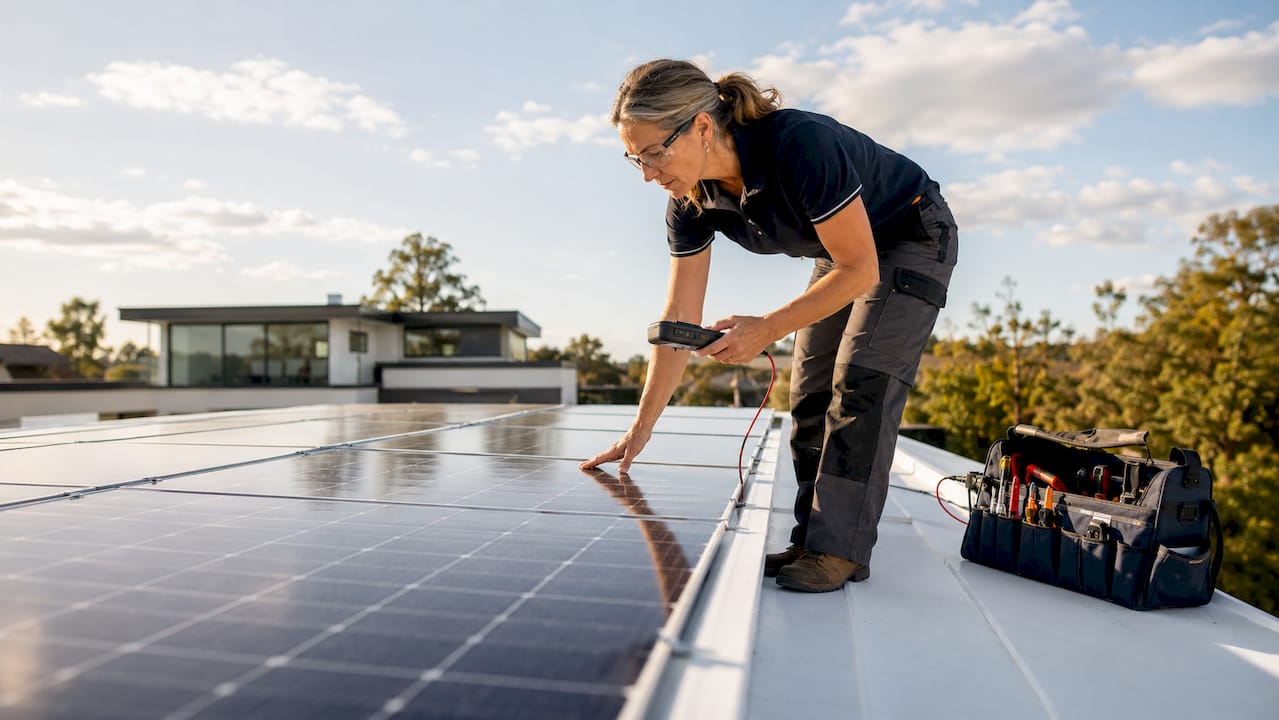
A cool roof is a roofing system engineered to reflect more sunlight and release absorbed heat faster than standard roofing, keeping your roof surface significantly cooler and directly improving solar panel performance. Understanding why cool roof complements solar panels matters because the two technologies share a physical relationship: the temperature of your roof surface determines how efficiently your panels generate electricity. High-reflectance roofing can lower peak roof surface temperatures by 50°F or more compared to dark asphalt shingles. That temperature gap translates directly into more kilowatt-hours from your solar system and lower cooling bills at the same time.
How do cool roofs reduce solar panel operating temperatures?
Solar panels lose efficiency as they heat up. Panel efficiency drops about 0.5% for every 1°C rise above 25°C. On a standard dark roof in San Diego during July, panels can easily reach 65°C or higher, meaning you could be losing 20% or more of your rated output just from heat.
Cool roofs address this through two measurable properties: solar reflectance and thermal emittance. Solar reflectance measures how much sunlight the surface bounces away rather than absorbing. Thermal emittance measures how quickly the surface releases any heat it does absorb. A high-quality cool roof coating can achieve a solar reflectance value of 0.65 or higher, compared to 0.05 for a standard black asphalt shingle.

The cooler roof surface conducts less heat upward into the panel mounting structure. Panels sitting on a surface that runs 50°F cooler operate closer to their rated temperature baseline. That difference alone can recover a meaningful portion of the efficiency loss that heat causes.
There is also a secondary effect worth knowing. Solar panels themselves shade the roof section directly beneath them. That shading further cools the roof surface under the array, creating a feedback loop where the cool roof and the panels mutually reduce each other’s operating temperature.
Pro Tip: Ask your installer for the solar reflectance index (SRI) rating of your current roof material before committing to a panel layout. If your SRI is below 29, a cool roof upgrade before installation will pay for itself faster than you might expect.
| Roof Type | Typical Surface Temp (°F) | Solar Reflectance | Panel Efficiency Impact |
|---|---|---|---|
| Dark asphalt shingle | 150–170 | 0.05–0.10 | Significant loss above 25°C |
| Standard light shingle | 120–140 | 0.25–0.35 | Moderate loss |
| Cool roof coating | 100–120 | 0.65–0.80 | Minimal loss, near rated output |
What are the energy and cost savings of pairing both systems?
The financial case for combining these two technologies is stronger than most homeowners realize. Combining a cool roof with solar panels can reduce overall home energy use by up to 40%, with cool roofs alone cutting cooling energy costs by 10–30%. That is not just a solar story. It is a whole-home efficiency story.
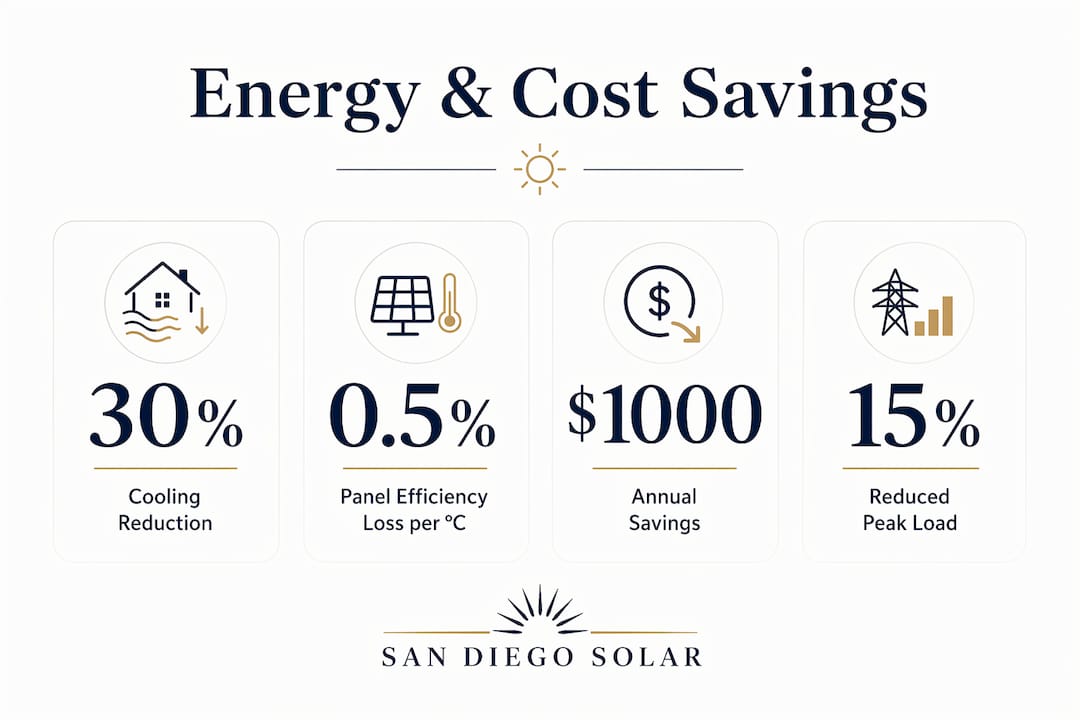
Philadelphia homeowners who paired cool roofs with solar installations saw measurable reductions across both their cooling loads and their grid dependence. San Diego homeowners face even stronger conditions for these savings, given the region’s year-round sun exposure and SDG&E’s high afternoon peak rates under NEM 3.0.
The savings stack in three distinct ways:
- Lower cooling bills. Cool roofs reduce the heat entering your attic and living spaces, so your air conditioner runs less. Rooftop air intake temperatures run 3.5°F to 7°F hotter than reported weather data due to roof heat soak. A cool roof corrects that, reducing compressor runtime and extending HVAC equipment life.
- Higher solar output. Cooler panels produce more electricity per hour of sunlight. That extra output is most valuable in the afternoon, exactly when SDG&E’s peak export rates are lowest under NEM 3.0, making self-consumption the priority.
- Peak demand reduction. Cool roofs can reduce peak electrical demand by 10–15% during the hottest afternoon hours. For homeowners in areas with demand charges or time-of-use pricing, that reduction directly cuts the bill.
The environmental benefit is real too. Cool roofs reduce reliance on high-carbon peaker plants by flattening the grid’s peak demand curve during the hours when solar output is highest. Your home becomes part of the solution to grid stress, not just a passive consumer.
How do different solar panel types interact with cool roofs?
Not all solar panels respond equally to a reflective roof surface. The distinction between monofacial and bifacial panels determines how much of the cool roof benefit you actually capture.
Monofacial panels absorb sunlight only from their front face. They benefit from the cooler operating temperature a cool roof provides, but they cannot use the reflected light bouncing off the roof surface. The efficiency gain from raising solar reflectance from 0.15 to 0.25 for a monofacial panel is roughly 1%. Meaningful, but modest.
Bifacial panels are built differently. They capture light from both the front and the rear face. Bifacial panels harvest reflected light off the high-reflectance roof surface, and that rear-side gain is substantial. Pairing bifacial panels with a cool roof can boost power output by 20–30% depending on the roof’s reflectance level. That is not a marginal improvement. It is the difference between a system that meets your energy goals and one that exceeds them.
Pro Tip: If you are replacing your roof and going solar at the same time, specify bifacial N-Type or TOPCon panels. The bifacial panel options available today are designed specifically to capture rear-side reflected light, and a cool roof gives them the reflective surface they need to perform at their best.
| Panel Type | Front Efficiency | Rear-Side Gain | Cool Roof Synergy |
|---|---|---|---|
| Monofacial standard | 19–21% | None | Low (temperature benefit only) |
| Bifacial N-Type / TOPCon | 21–23% | 10–30% additional | High (temperature + reflected light) |
The choice of panel type should factor into your roof upgrade decision from the start. A cool roof paired with monofacial panels is still better than a dark roof. A cool roof paired with bifacial panels is a fundamentally different level of performance.
What should homeowners know before combining both systems?
Timing and planning separate a good installation from a great one. The most common mistake homeowners make is installing solar on a roof that is 8–12 years old, then needing a roof replacement 5 years later. That means removing and reinstalling the entire solar array, which adds cost and disruption.
Aligning your cool roof replacement with your solar installation is the single most effective way to maximize long-term value. A fresh cool roof surface stays highly reflective over the solar panel’s 25-year lifespan. An aging roof loses reflectance as the surface degrades, reducing the synergy over time.
Here is what to address before your installation:
- Assess your roof’s remaining life. If your roof has fewer than 10 years left, replace it with a cool roof material before the solar array goes on. Doing both at once with one contractor saves money and eliminates future removal costs.
- Check your attic insulation and ventilation. Proper attic insulation and ventilation are foundational to realizing the full energy efficiency benefits of cool roofs combined with solar. Without them, heat that the cool roof reflects away can still enter your living space through an under-insulated attic.
- Verify the reflectance rating of your chosen roofing material. Look for an Energy Star-rated product with a solar reflectance index above 29 for steep-slope roofs, or above 78 for low-slope applications.
- Plan for maintenance. Cool roof coatings lose reflectance if they accumulate dust, algae, or debris. Schedule annual cleaning to keep the surface performing at its rated level.
- Work with a contractor who handles both roofing and solar. Separate contractors create gaps in warranty coverage and coordination. An integrated team designs the system as a whole, not as two separate projects bolted together.
San Diego’s climate adds one more consideration. The region’s marine layer keeps mornings cooler, but afternoons in inland communities like Poway, Escondido, and El Cajon regularly exceed 95°F in summer. Those are exactly the conditions where a cool roof delivers its biggest temperature reduction and where your panels need it most.
Key takeaways
A cool roof paired with solar panels is the most effective passive and active energy combination available to homeowners, with combined savings reaching up to 40% of total home energy use.
| Point | Details |
|---|---|
| Temperature drives efficiency | Solar panels lose 0.5% output per 1°C above 25°C; a cool roof cuts that loss at the source. |
| Bifacial panels multiply the benefit | Bifacial panels gain 20–30% more output on cool roofs versus roughly 1% for monofacial panels. |
| Savings stack three ways | Cool roofs reduce cooling bills, increase solar output, and cut peak demand by 10–15%. |
| Timing the install matters | Replacing your roof and installing solar together avoids costly future panel removal. |
| Attic prep is non-negotiable | Proper insulation and ventilation are required to capture the full efficiency benefit indoors. |
The combination most homeowners overlook
I have talked with hundreds of San Diego homeowners who approach solar as a standalone decision. They pick their panels, get a system sized to their bill, and move on. The roof is an afterthought. That is a mistake I see play out in real numbers.
When a homeowner in Rancho Santa Fe asked me why their new system was underperforming projections, the answer was sitting right above the panels: a 14-year-old dark shingle roof running surface temperatures that were cooking the array every afternoon. The fix was not a bigger system. It was a cool roof.
The misconception I hear most often is that solar panels already shade the roof, so the roof material does not matter. That is partly true for the area directly under the panels. But the rest of your roof still radiates heat into the attic, into the panel mounting rails, and into the ambient air around the array. A cool roof addresses the whole system, not just the footprint of the panels.
Bifacial panels have changed the math significantly. A few years ago, the rear-side gain from a reflective roof was a theoretical benefit. Today, with N-Type and TOPCon bifacial panels widely available, that 20–30% rear-side boost is a real, bankable number. If you are planning a solar installation in 2026 and you are not having a conversation about your roof’s reflectance, you are leaving performance on the table.
My advice is straightforward. Get your roof assessed before you sign a solar contract. If it needs replacement within the next decade, do it now, do it with a cool roof product, and do it with the same team handling your solar. The solar roofing integration approach is not a premium add-on. It is the right way to build a system that performs for 25 years.
— Curtis Williamson
How san diego solar integrates cool roofs with solar
San Diego Solar has been designing and installing residential solar systems across San Diego County since 1996, and the team understands that your roof and your panels are one system, not two separate projects.

Every installation starts with a roof assessment. If your roof needs a cool roof upgrade before panels go on, San Diego Solar handles both with 100% in-house crews, no subcontractors, and a single warranty covering the full system. That means no coordination gaps, no finger-pointing between trades, and no surprise costs when your roof needs attention years down the line. San Diego Solar’s residential solar installation services are custom-designed around your roof condition, your energy usage, and your goals. Contact San Diego Solar for a free consultation and get a written project timeline before you commit.
FAQ
What is a cool roof and how does it work?
A cool roof uses high-reflectance materials or coatings to reflect more sunlight and release absorbed heat faster than standard roofing. This keeps the roof surface up to 50°F cooler than dark asphalt shingles under the same sun exposure.
How much do cool roofs improve solar panel efficiency?
Solar panels lose about 0.5% of output for every 1°C above 25°C. A cool roof that reduces surface temperature by 50°F can recover a significant portion of that heat-related efficiency loss, keeping panels closer to their rated output during peak afternoon hours.
Do bifacial solar panels perform better on cool roofs?
Yes. Bifacial panels capture reflected light off the roof surface from their rear face, and a high-reflectance cool roof provides the reflected light they need. The output gain from pairing bifacial panels with a cool roof can reach 20–30%, compared to roughly 1% for standard monofacial panels.
When should i replace my roof before going solar?
Replace your roof before installing solar if it has fewer than 10 years of life remaining. Aligning the roof replacement with your solar installation avoids the cost and disruption of removing and reinstalling the array when the roof eventually needs replacement.
Can a cool roof reduce my air conditioning costs too?
Yes. Cool roofs lower rooftop air intake temperatures by 3.5°F to 7°F compared to standard roofs, which reduces HVAC compressor runtime and cooling energy costs by 10–30% depending on your climate and home construction.
Recommended
- Solar Roofing San Diego — One Team, One Warranty | San Diego Solar
- San Diego Solar Blog — Insights from 30 Years of Experience | San Diego Solar
- Solar Installation Del Mar, CA | Coastal Solar, 30 Years | San Diego Solar
- Solar Installation North Park, San Diego | 30 Years, In-House Crews | San Diego Solar